
Written By Daniel Truckey, Director/Curator, Beaumier U.P. Heritage Center
There are nearly 6,000 colleges and universities in the United States. Each has their own identity and character, though one does have to ask; are they really all that different? This question seems particularly relevant when looking at our regional state institutions. Is there really that much of a difference between Northern Michigan University versus Eastern, Central or Western? Geographic and demographic natures aside, are the differences in their identities really just a school mascot and the color of our uniforms? No, I believe that the students, faculty and staff of our universities over time truly have a huge impact on creating a unique identity for a university.
Over the past 125 years, Northern has gone through some obvious and monumental changes that have greatly altered its nature and at times its mission. At its core, however, Northern is a place where teaching and connections between the student and the faculty are central to its identity. It is a place that values creativity, social interaction and mentorship. I would argue that these qualities are something that was establish in the first two decades of the university’s history and has continually informed our mission to this day. I would also argue that it was the dominant presence of women on Northern’s campus that played a role in defining that identity.
In 1899, the Northern Normal School was founded and in it’s first year of operation had six faculty members, which includes the University Principal (President) Dwight B. Waldo (his wife was also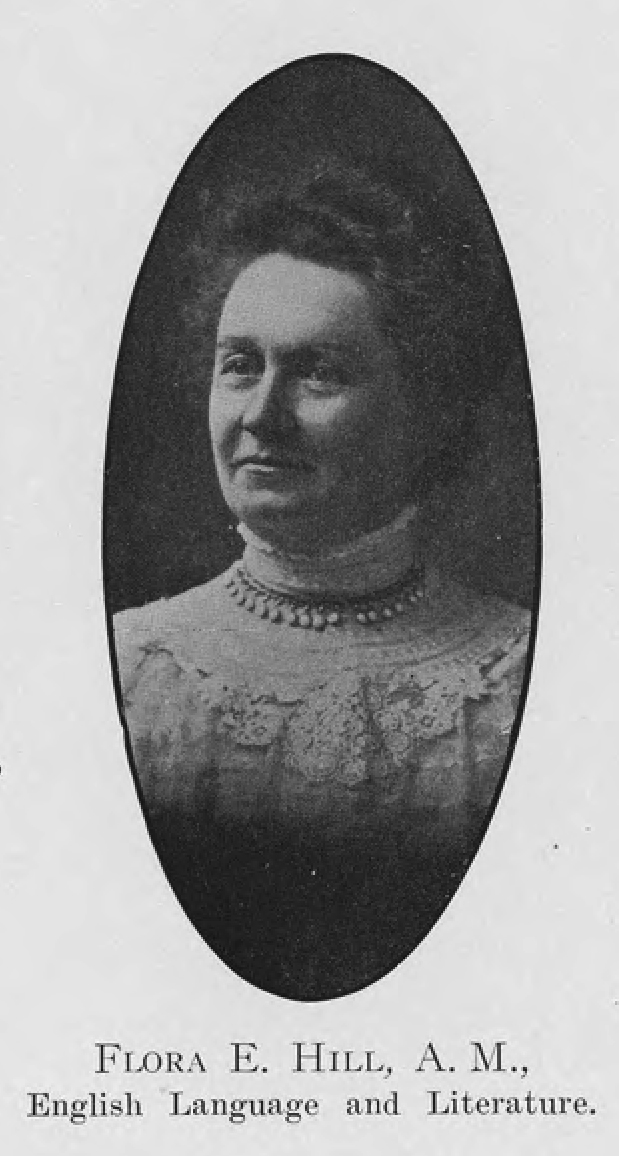 the first librarian). There were two women hired to teach in that first year, Flora Hill taught English and Martha Ackerman taught courses in Art.
Flora Hill had received her B.A. from the University of Michigan and was particularly interested in English literature and children’s literature. In 1906, she published her own textbook for her Children’s Literature course. She often took leaves of absences to travel in Europe, in particular England where she could study the homes and countryside of her beloved English poets. She returned to the University of Michigan to receive her Masters in 1905.
Martha Ackerman was a graduate of the Michigan Normal College in Ypsilanti, and took a leave of absence in 1902 to continue her studies at Columbia University. She didn’t return to Northern as she married a fellow Northern history assistant, Paul Leland Haworth, who was receiving his Ph.D. at Columbia. Her replacement was Grace Spalding.
Grace Allen Spalding was born in Chicago, Illinois in 1872 and had a great love for art of all kinds. As a young woman, she left for New York City and received her bachelor’s degree at the Columbia Teachers College, Columbia University, and the Pratt Institute. Before coming to Northern in 1903, she taught a few years at Evanston College in Illinois.
When Spalding came to Northern State Normal School, there wasn’t a big focus on art education. She changed that and just 4 years after the school was started, she was leading the art program. Spalding created the majority of the department's offerings, which included drawing, advanced drawing, composition and design, history of architecture and history of painting.
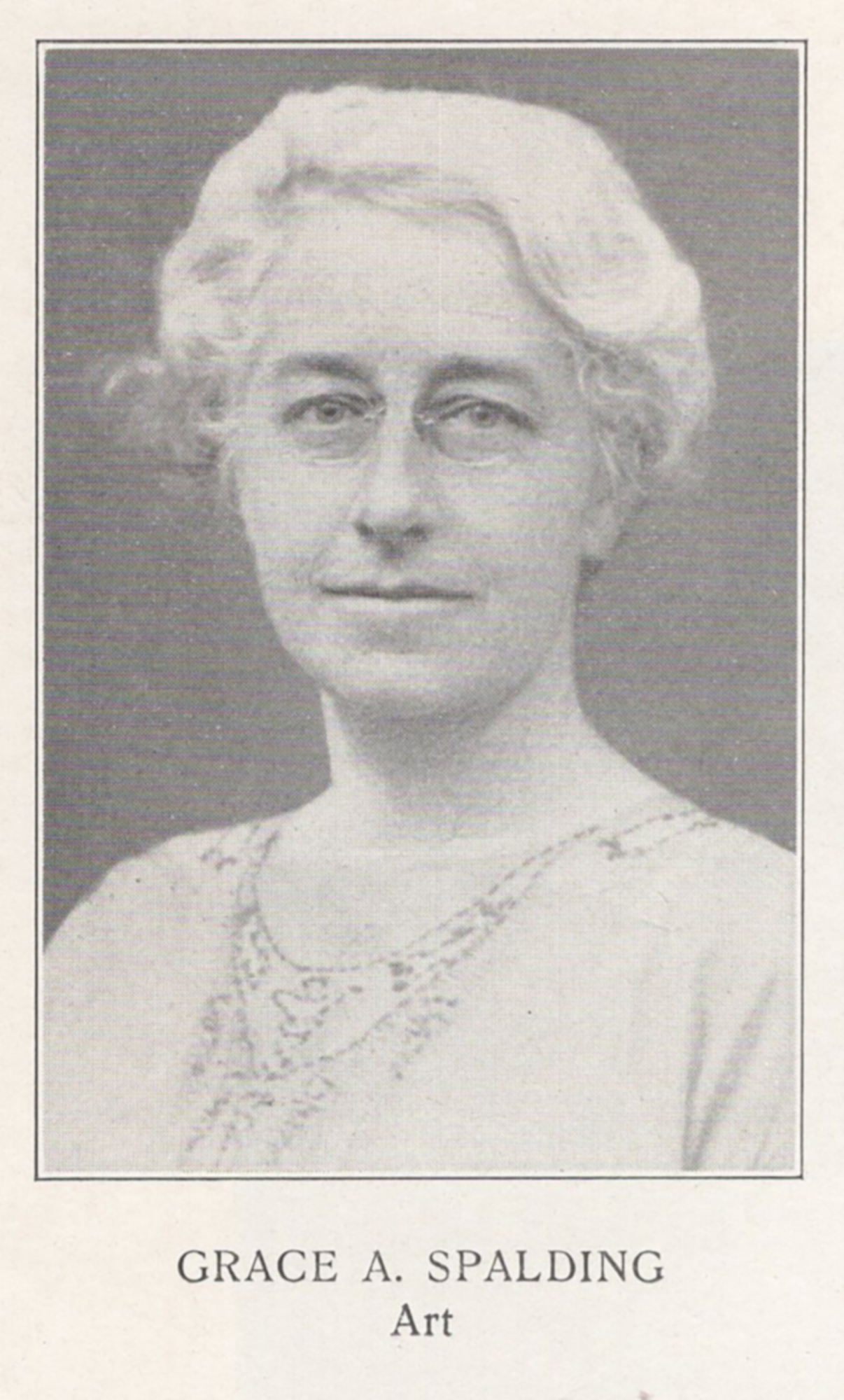 Spalding furthered her art education by taking several sabbaticals and summer trips to study in Europe. She went to Florence, Italy in 1907 and in 1921 studied at the Academie Colarossi and Academie Delacleuse, and the studio of Richard Miller in Paris. She also studied at the University of California, Harvard University and the Metropolitan Museum of Art in New York.
In the article, The Aim For Art Instruction in Schools, written by Spalding and published in the Western Journal of Education, she wrote: “As a nation we have fully realized that it is far more worthwhile to educate one hundred people to appreciate, than to create one artist; that it is worth the expense and time to the nation to teach the masses to have feelings about the things they see around them. That artisan is a better citizen who is able to judge between a work of mediocrity and one of artistic value; for it is through such an ability to judge and select that respect for the work and workman is attained.”
Grace Spalding would teach at Northern for 35 years, ending with her retirement in 1938. Though she never married, her constant companion for most of that time was the Dean of Women, Ethel Carey. Soon after Carey came to the university in 1924, they became close friends and began sharing an apartment in the home of architect D.F. Charlton at 438 East Ohio Street. They would live together for almost 30 years, eventually in a home purchased by Carey at 636 W. College Ave.
Grace Spalding died on Christmas Day in 1957 in Chickasha, Oklahoma, where she spent many of her winters in retirement.
Tynne Ostlund, ‘37 , on Grace Spalding
“She was very dignified. But she was very strict, very strict. And when she said something, you did that. But she was so good to me, honestly. And she used to live with Ms. Carey, the Dean of Women. And they were both so nice to me. I remember one time in the auditorium, … I was there studying and all of a sudden Ms. Carey was over on the other side with Ms. Spalding and she came over and said, ‘Tynne come over here, we want to talk to you.’ So I went over and she said, we want you to come and go to school in art. I thought ‘Well, I guess they know better than I do. And they think I can do it.’ So I switched to art then.”
Northern’s first Dean of Women was Catherine A. Maxwell, who was appointed to the position in 1904, as well as being an instructor in history and civics. She was the head of the history department until 1918, when she unexpectedly died on a trip to Chicago.
The January issue of The Quill featured a full-page memorial to her.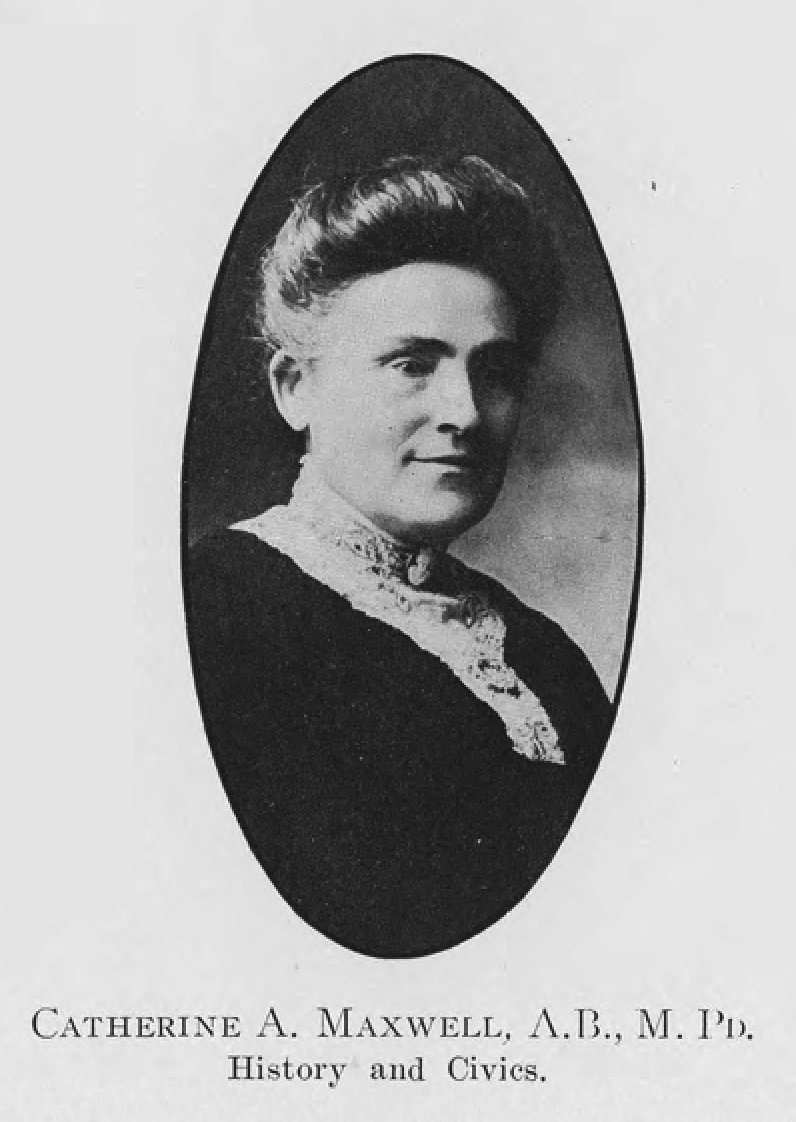
“Her work in the Northern State Normal school has been very successful. While here she gathered around her a large number of friends among the faculty and students of the school and in the city of Marquette. Miss Maxwell had in a signal degree the faculty of making and retaining friends. She was extremely loyal in her friendships and received loyal friendship in return. Miss Maxwell had a great sense of humor and few could tell a story more delightful than she, and none of her friends will ever forget the power and charm of her stories. As Dean of Women she was a great friend and a splendid counselor for students. It was only after students had entered into their life-work that they fully realized the wisdom and friendship Miss Maxwell had given them while in school.”
Sophie Linton began teaching at Northern in the fall of 1900, a graduate of Wisconsin State Normal, Stevens Point. She taught music, trained vocal and instrumental performers, and sang at civic and school functions. Living in the Northern dormitory, she encouraged the other residents to 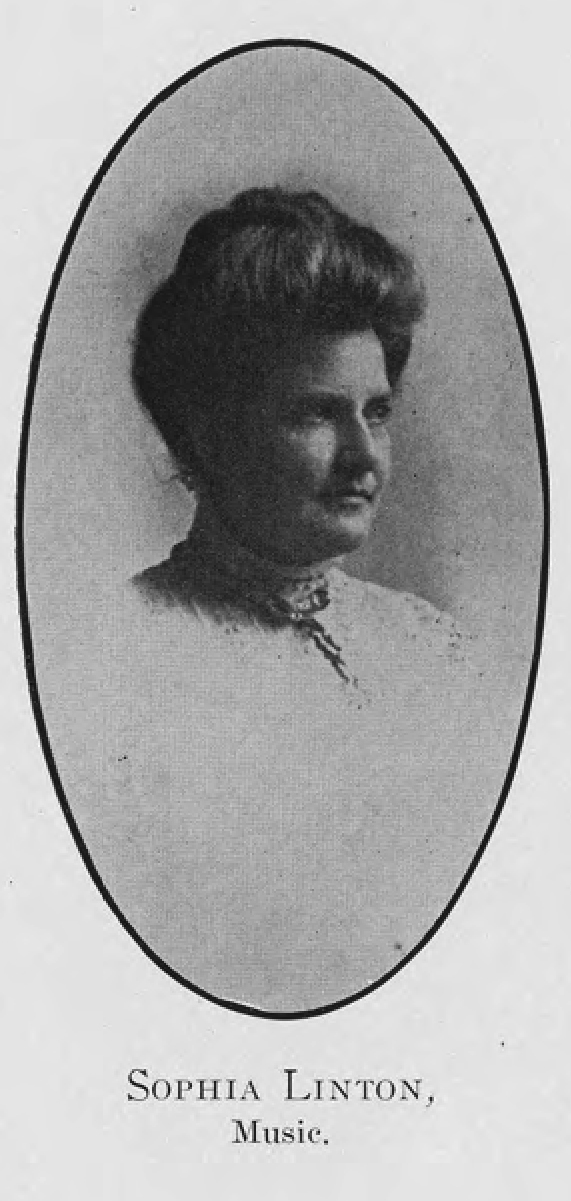 form the Dormitory Glee Club. A number of singing groups organized by her sang at school assemblies, local churches and even the State Prison. Singing was so important to her, she also instituted the curriculum policy that all students had to take chorus, a policy that lasted until 1915. She retired in June of 1923 stating, “It is time for someone younger to take over.” She passed away in 1948 in Plainwell, Michigan where she had been living since her retirement.
Like so many other faculty members, Linton had spent time in Europe. It is surprisingly common how many of the faculty members took leaves of absences and studied abroad, especially considering that most did not come from wealthy families and certainly were not paid very much. In 1936, the average salary of an instructor at a state college was $1,500, which is the equivalent of $33,000 in 2024 dollars. It shows how much Northern valued such professional development even during its early years.
Almost all of the women who taught at Northern had to live in rooming houses around Marquette. Some of these places were very large and had many faculty members living in the same building. Sometimes, families would take in one or two boarders into their home. Other faculty members would choose to live together in larger apartments. It was not uncommon for female faculty members to rent rooms for their entire career at Northern and to switch locations on a regular basis. Those faculty members who did ascend to professor status or had positions in the administration made enough money to buy their own homes later in their career.
Where most of the men who taught or worked at Northern were married, almost none of the women were married, especially if they were instructors. In fact, it was the general policy at educational institutions during this period that married women could not continue to work as professionals (it was different for secretaries and support staff) and certainly not after they had children. For this reason, the vast majority of the women who taught at Northern in the early 20th century chose to never marry so that they could continue their careers. Where this might have been a sacrifice for some, there is some evidence to show that it was a good option for women who had no desire to raise a family or to engage in a heterosexual relationship.
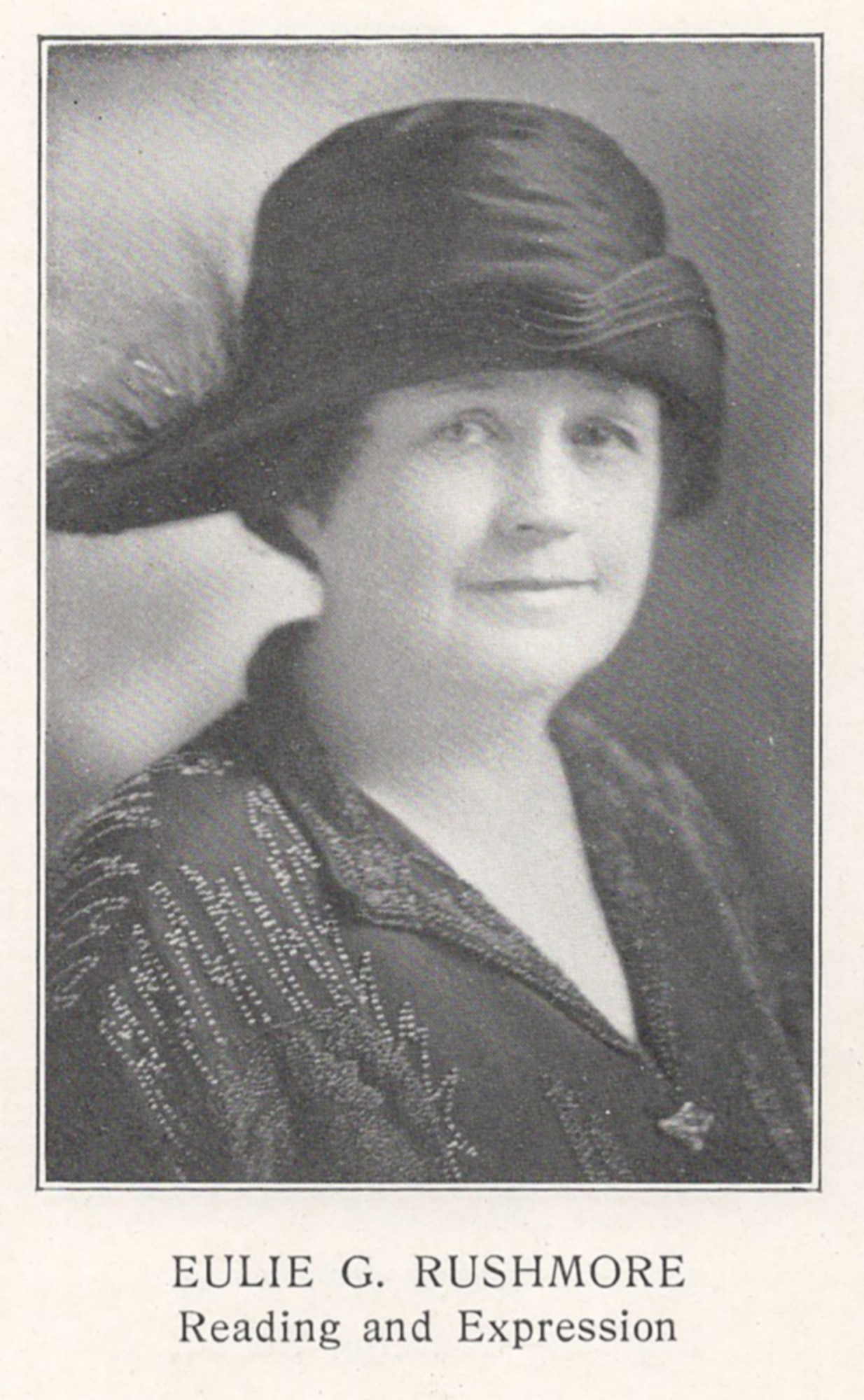
Eulie Rushmore was born in Natick, Massachusetts in 1872, though we have no information on who her parents were or her maiden name. Her husband, Charles Rushmore, was a bookkeeper and in 1896, they lived together in Lansingburgh, New York. By 1900, she was widowed and working as a teacher in Buffalo, New York. Though she had a daughter, Louisa, in 1905 Northern hired her to take over the new Department of Expression and Physical Training. The physical training was required of students to “correct abnormalities, develop physical strength and increase the elasticity of the muscles.” She stated, her interest in developing her pupil’s personalities and a fear of the “pernicious result of unduly suppressing the emotions.” (Daily Mining Journal, 1/26/1907).
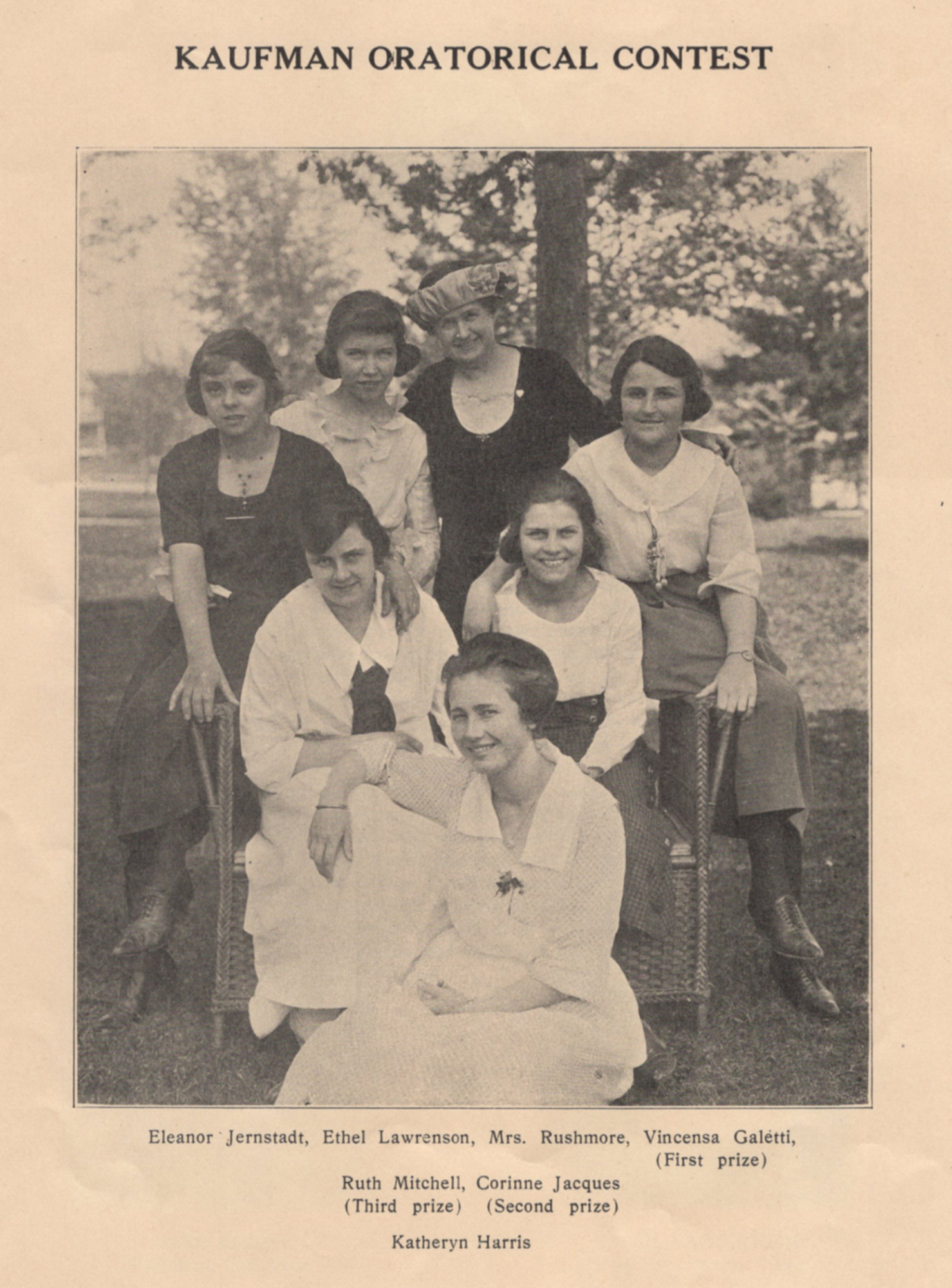 Rushmore’s greatest contribution to Northern was the development of the first theatrical productions at the college. These included early productions of Shakespeare classics like Midsummer’s Night Dream, As You Like It, The Merchant of Venice and Twelfth Night. Because there were so few men at the college, most of the roles were performed by women. The early productions were all held in a specially designed room in the rebuilt Longyear Hall with seating for 100 and a platform for a piano. In 1912, she took a sabbatical to study theater in Ireland and the British Isles. A year later, her students performed the Irish playwright W.B. Yeat’s Land of Heart’s Desire.
After her retirement in 1925, Rushmore moved to Pennsylvania with her daughter’s family. However, she returned to Marquette each summer for the rest of her life. It was in Marquette that she passed away on June 26, 1932.
From the “N.S.N. Alphabet” by Adele D. Hessell, Olive and Gold 1910
“R is for Rushmore, whom we all do adore
And her readings and virtues we’ll praise evermore.”
“Qu’Import?” by Eulie Gay Rushmore, The Quill, December 1915
Paused you a moment
At My window ledge
To list my music-
Music of my ‘crippled lyre?’
And did your sound
Rekindle and expand and tune
To my poor music’s fire?
And did your eye grow bright,
Your step more free,
Your life more full,
Because of me?
Ah, then ‘twas well,
Altho I strove in pain
And sought thru tears
My slighted lyre’s lost soul, again.
There are few people who had more impact on Northern than the long-time Dean of Women, Ethel Carey (1924 – 1956). She grew up the daughter of a saw mill worker in Harbor Springs, Michigan. While in high school, her school superintendent was James Munson, who would become Northern’s third president in 1923. A graduate of Alma College in 1911 and then from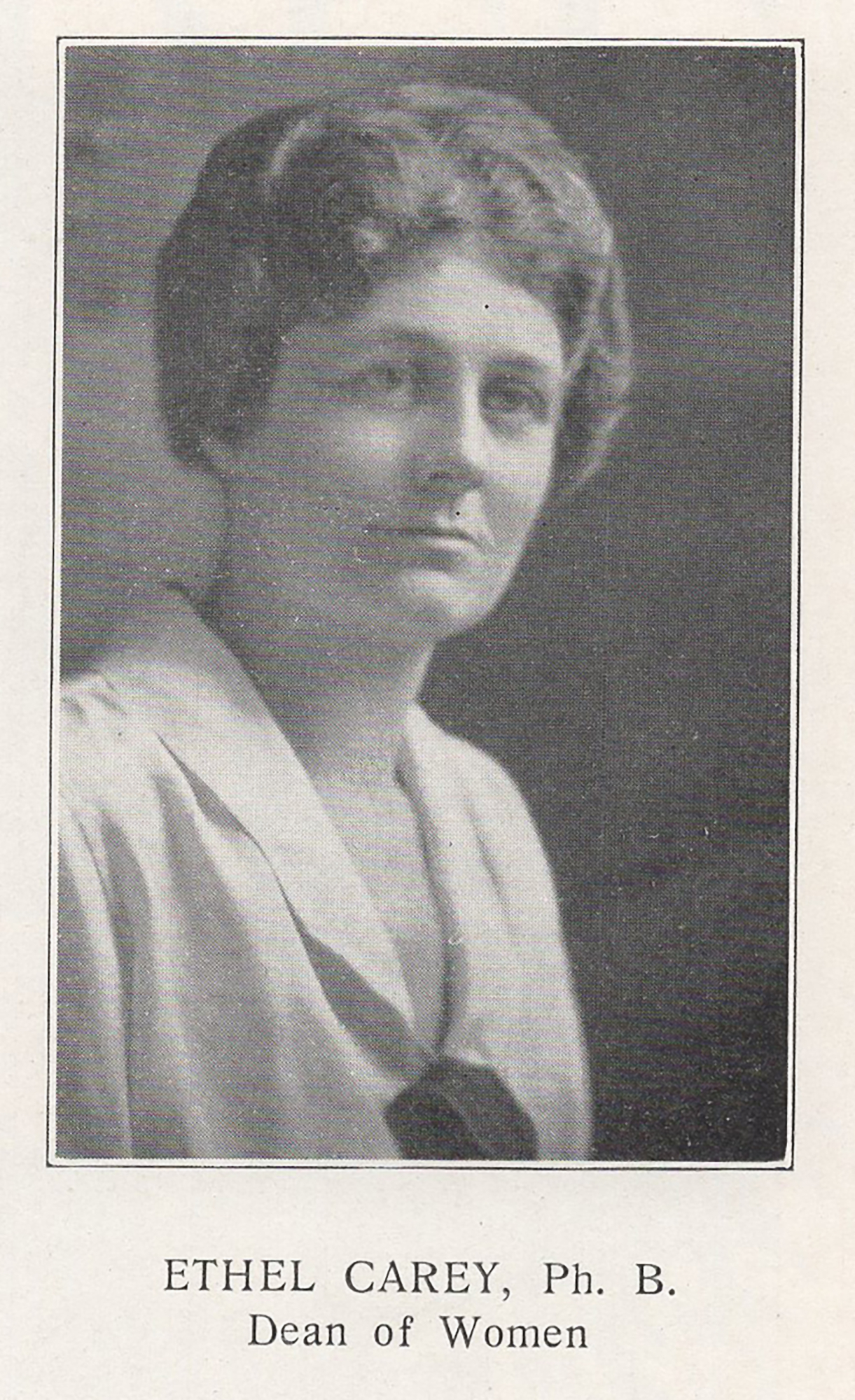 Columbia University with a Bachelor’s in Philosophy, she taught at Fenton and Harbor Springs High Schools and Central Michigan Normal School. President Munson hired her to be Northern’s Dean of Women in 1924.
Like her close friend and roommate, Grace Spalding, Ethel was very refined and a strict disciplinarian. Her Code of Conduct and Rules for Matrons were legendary on campus. However, there were reasons for why she was so strict. Many of the young women at Northern were from small rural communities across the Upper Peninsula and beyond. She believed that it was important for them to be taught proper social etiquette. She held regular refinement sessions for the female students where she gave instructions on proper table service and behavior at tea parties.
However, her greatest contribution was in the encouragement of student social groups to entertain each other and the faculty. She also created several campus traditions, most importantly, the Rose Ceremony each spring which honored all of the female graduates (this tradition continued until 1973).
Ms. Carey’s most difficult challenge stemmed from an automobile collision on the Big Bay Road in 1934, which killed her visiting mother. Carey was unconscious for several days, suffered severe injuries including disfigurement of her face. She took an extended leave of absence from the college to recover and her face had to be rebuilt at the University of Michigan hospital. She returned and continued to serve as the Dean of Women until her retirement in 1956. She passed away on April 15, 1962 at the age of 72.
Olive Fox, ’20, on Ethel Carey
“She had high aspirations for her girls. She wanted them to look well, speak well, not to be rough necks. She wanted real ladies. I can remember seeing her putting her gloves on. There was … a group of girls that she kept right on their toes. They had to be dressed well, I mean clean, and neat. They had to speak well. They had to have party manners.”
Thomas Knauss, ’54, on Ethel Carey’s rules
“Christmas lights decorated the second and third balconies (of Kaye Hall). On Dean Ethel Carey's instructions, the lights were green, yellow and white. The use of the color red in any form was not allowed. Carey thought that it increased and promoted passion among people. Around 1949-1950 a number of male students decided to play a joke on Dean Carey and the students. They entered Kaye Hall at night and painted every white light red. Most women wore some red on their person. In the Carey Hall dining room, female students were required to wear dresses from Sunday through Friday. Only on Saturday evenings could they wear slacks.”
One of the most fascinating characters to teach in the early days of Northern was Frances Russell, the daughter of James and Catherine Russell. Her father was a journalist who eventually became the Warden of the State Prison in Marquette. Frances grew up in Marquette and attended 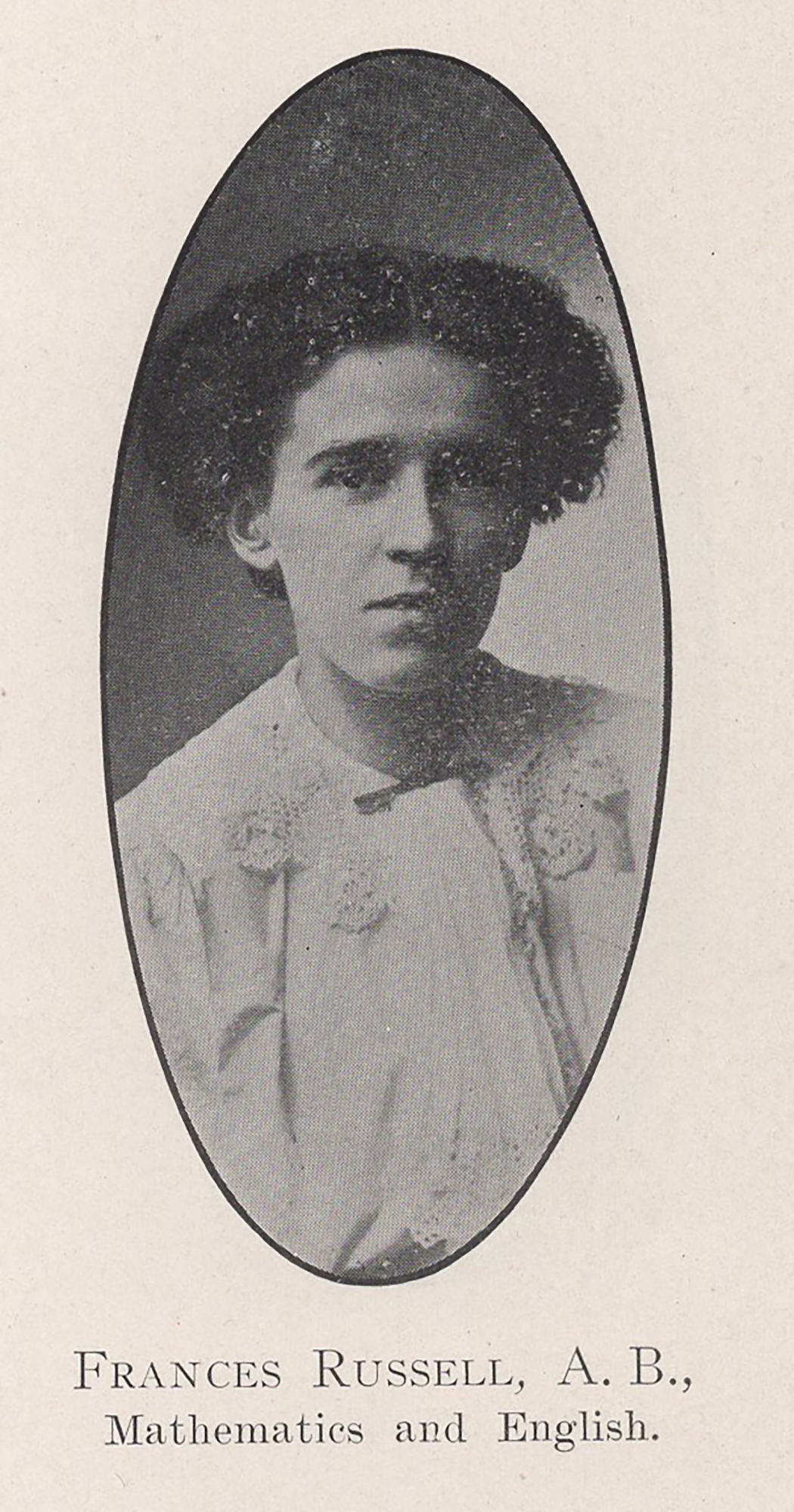 Northern Normal, and was a member of the college’s first graduating class in 1901. She then attended the University of Michigan before returning to Marquette where she taught at the Third Street School. In 1905, she was hired by Northern to teach as an assistant in the English Department. Around 1910, she left that post and her activities are vague through the 1910s though it was known that she was living with her family at the State Prison. It was during this time that she befriended a Marquette woman named Winifred Tucker. In December of 1920, the pair moved to New York City and took over a former antique store at 21 West 8th Street in Greenwich Village. Over the next two decades their cafe, The Jumble Shop, became a busy and popular hangout for bohemian writers and artists in the “Village,” such as Thomas Wolfe, Daniel Chester French, Martha Graham, Willem de Kooning and Stuart Davis. The couple lived together in various locations in Greenwich Village until 1937 when Winifred died. Frances would sell The Jumble Shop in the 1940s and retired to Laguna Beach, California where she died on July 14, 1956.
The influence of female faculty on the academics of the university would continue until after WWII, with many faculty members such as Grace Spalding and Ethel Carey teaching at the university for well over 30 years. Still men continued to dominate administrative posts and the science positions. However, after WWII, there was a growing shift to a more male dominated faculty. This was the case at universities across the country, as men came back from the war and began to pursue an education with their GI Bill in hand. This also had the impact of some schools having fewer openings and scholarships for women. Where there definitely was a shift in the gender balance at Northern after WWII and the Korean War, there was still a very strong female presence on campus, both among students and faculty.
One of the most important female faculty members from this time was Mildred Magers. The daughter of Dr. Samuel Magers, head of Northern’s biology department, Mildred Magers became the first woman faculty member at Northern to receive her Ph.D. and a full professorship at the college. Born in Texas in 1897, her father moved her family to Marquette from Ypsilanti in 1912. A graduate of Graveraet High School, she attended Northern where she received her “Life Certificate.” She then received her bachelor’s from the University of Illinois and master’s from Pennsylvania State College. Before she joined the faculty at Northern in 1928, she had already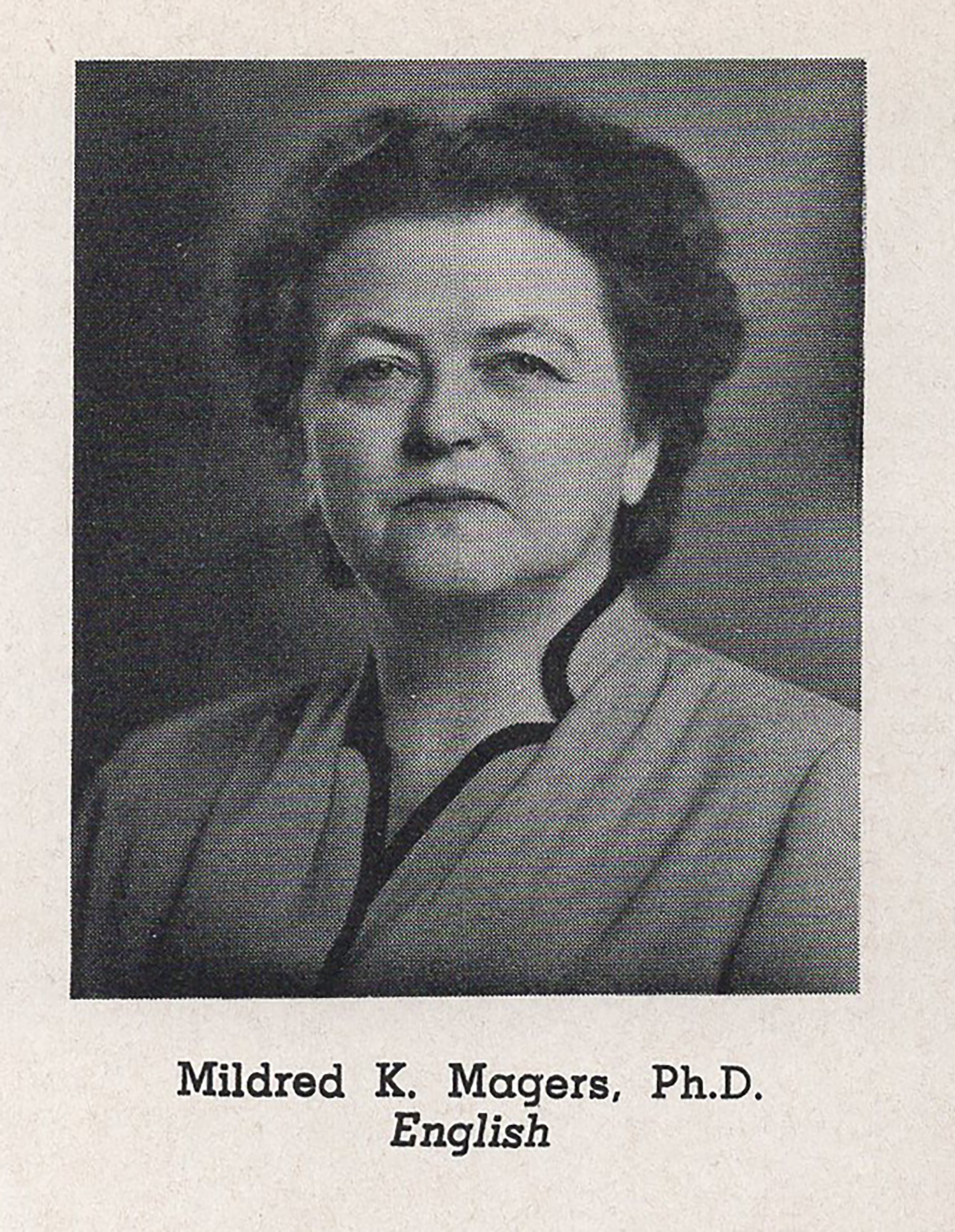 taught at Ann Arbor High School and was an instructor of English and history at the Canton Christian College in Canton, China.
Magers would teach at the university for the next 30 years in the department of language and literature. In the early 1940s, she began work towards her doctorate at the University of Michigan and in 1943, took a leave of absence from Northern to teach at Western Michigan College, in part, to finish her degree, but also because the college had so few faculty members due to the war. She returned to Northern in 1944 with her Ph.D. and became the first female professor at the college.
During her life, she traveled extensively, including tours of the Eastern Mediterranean and Britain. In 1951, she studied at the Shakespeare Institute at the University of Birmingham and did additional graduate work at Yale University and the University of Chicago. On January 29, 1958, Dr. Magers was walking into Longyear Hall to give an 8 a.m. final exam, when she collapsed and died of a heart attack. The Northern News a month later would publish this “In Memoriam”.
“Miss Magers was not only a dedicated scholar and stimulating instructor, but also a sincere and sympathetic friend to both faculty and students. Although constantly enlarging her sphere of knowledge and interests, she was never content with learning for its own sake. Many graduates and students of Northern have felt the broadening and enriching of their intellectual vistas through contact with her teaching.”
“Informal gatherings in her home were often the means Miss Magers employed in extending and interpreting to students the benefits of her study and her experiences in world travel. Always eager to share her ideas, Miss Magers made these gatherings the scene of very profitable instruction.”
By the late 1950s, the ratio of men to women instructors was continuing to grow in the male’s favor. In 1957, there were 47 male instructors and 25 women. However, with the retirement of Ethel Carey and the death of Mildred Magers, there certainly was a passing of the torch, as they were the last survivors of Northern’s first few decades. However, it was in that same year that Northern hired its first female math teacher, Beatrice Boynton, who just happened to be the wife of the Department Head, Holmes Boynton. By 1964, Northern had grown exponentially and so did the faculty, mostly on the male side. In that year, there were 105 male instructors and 35 females. With more academic programs and degrees available, Northern was hiring but a true demographic shift had taken place.
Sources:
Central Upper Peninsula and Northern Michigan University Archives
UPLINK (Upper Peninsula Digital Network)
Hilton, Miriam. Northern Michigan University – The First 75 years. NMU Press, Marquette, 1974
Magnaghi, Russell. A Sense of Time: The Encyclopedia of Northern Michigan University. NMU Press, Marquette, 1999.