
Bloodborne Pathogens Exposure Policy and Control Plan
Purpose:
Northern Michigan University (NMU) is committed to complying with the safe work practices established by the Michigan Occupational Safety and Health Administration (MIOSHA) to minimize employee illness and injury. NMU will adhere to MIOSHA’s Bloodborne Pathogens Standard (Rule 325.70001–.70018, Part 554) to reduce occupational exposure to Hepatitis B Virus (HBV), Human Immunodeficiency Virus (HIV), and other bloodborne pathogens that employees may encounter in the workplace.
Applicability:
All University employees, full time, part time, temporary, casual labor, students, who may incur an actual or reasonably anticipated exposure to blood or other potentially infectious materials.
Policy:
It is the policy of Northern Michigan University to comply with the requirements of the Bloodborne Pathogens Standards.
The NMU Safety Department will publish and periodically update a Bloodborne Pathogens Exposure Control Plan to:
Define key terms
- Establish general safe work practices for working with bloodborne pathogens
- Categorize exposure risks and identify vaccination requirements
- Identify methods of compliance
- Specify required engineering controls
- Document universal precautions
- Identify required personal protective equipment (PPE)
- Outline housekeeping procedures
- Establish procedures for proper infectious waste disposal
- Define post-exposure evaluation and follow-up procedures
- Specify required labels and signage
- Identify required training programs
Table of Contents
- Purpose
- Exposure Determination
- Methods of Compliance
- Definitions
- Universal Precautions
- Engineering Controls
- Housekeeping
- Infectious Waste Disposal
- Post Exposure Evaluation and Follow-up
- Labels and Signs
- Work Practice Controls
- Personal Protective Equipment
Training
2026 Note: The Appendices are provided immediately in the NMU Policy Database and at the Safety Department website as word doc attachments, plending a digital accessibility review.Appendix A - List of sharps container locations on campus
Appendix B - Form for employees in category A who decline the Hep B Vaccination
Appendix C - Procedure of removing potentially contaminated equipment from service
Appendix D - Guideline for cleaning surfaces
1. PURPOSE
One of the major goals of the Michigan Occupational Safety and Health Administration (MIOSHA) is to regulate facilities where work is carried out and to promote safe work practices in an effort to minimize the incidence of illness and injury experienced by employees. Relative to this goal, MIOSHA has enacted the Bloodborne Pathogens Standard, codified as Rule 325.70001-.70018 (Part 554). The purpose of the Bloodborne Pathogens Standard is to reduce occupational exposure to Hepatitis B Virus (HBV), Human Immunodeficiency Virus (HIV) and other bloodborne pathogens that employees may encounter in their workplace.
Northern Michigan University believes that there are a number of good general principles that should be followed when working with bloodborne pathogens. These include:
- Risk of exposure to bloodborne pathogens should never be underestimated.
- It is prudent to minimize all exposure to bloodborne pathogens.
- Departments should institute as many engineering and work practice controls as possible
- to eliminate or minimize employee exposure to bloodborne pathogens.
- This Exposure Control Plan is implemented to meet the requirements of the MIOSHA
- Bloodborne Pathogens Standard and also to assure that all NMU employees have a safe
- workplace environment.
- The objectives of the Exposure Control Plan are:
- To protect employees from the health hazards associated with bloodborne pathogens.
- To provide appropriate treatment and counseling in the event that an employee is exposed
- to bloodborne pathogens.
- To provide employees with timely and appropriate training information on bloodborne
- pathogen related diseases.
2. EXPOSURE DETERMINATION
NMU has evaluated routine and reasonably anticipated tasks and procedures to determine whether there is actual or reasonably anticipated employee exposure to blood or other potentially infectious material. Based on this evaluation NMU has categorized all employee positions. Those positions determined to be in category A consist of occupations that require procedures or that involve exposure or reasonably anticipated exposure to blood or other potentially infectious material. This includes procedures or tasks conducted in nonroutine situations as a condition of employment.
- R 325.70003 Rule 3 (2) This exposure determination has been made without regard to the use of personal protective clothing and equipment.
- R 325.70003 Rule 3 (3) For a complete list of these positions go to the NMU Safety Department website.
All Employees in Category A shall be offered the Hepatitis B vaccination at no cost to the employee. If the employee declines, the waiver form must be signed and kept in the employee’s file with Human Resources.
3. METHODS OF COMPLIANCE
There are a number of areas that must be addressed in order to effectively eliminate or minimize exposure to bloodborne pathogens. Deans, Department Chairpersons, Directors, Managers, and Supervisors are responsible for ensuring compliance with the NMU Exposure Control Plan. Areas dealt with in the plan are:
- Training and Education.
- Following Universal Precautions.
- Establishing appropriate Engineering Controls.
- Implementing appropriate Work Practice Controls.
- Using necessary Personal Protective Equipment.
- Proper Disposal of Infectious Waste.
- Implementing appropriate Housekeeping Procedures.
By following the requirements of MIOSHA's Bloodborne Pathogens Standard in these seven areas, it is expected this will eliminate or minimize the employees' occupational exposure to bloodborne pathogens as much as possible.
4. DEFINITIONS
The following provides clarifications of some terms used in this plan:
BIOLOCICALLY HAZARDOUS CONDITIONS: equipment, containers, rooms, materials, experimental, animals, animals infected with HBV or HIV virus, or combinations thereof that contain, or are contaminated with, blood or other potentially infectious material.
BLOOD: Human blood, human blood components, and products made from human blood. The term "Human Blood Components" includes plasma, platelets, and serosanguinous fluids (e.g., exudates from wounds).
BLOODBORNE PATHOGENS: Any pathogenic microorganism that is present in human blood and can infect and cause disease in persons who are exposed to blood containing the pathogen. Examples include: HIV, Hepatitis B, Hepatitis C, malaria, syphilis, babesiosis, brucellosis, leptospirosis, arboviral infections, relapsing fever, viral hemorrhagic fever, etc.
CLINICAL LABORATORY: A workplace where diagnostic or other screening procedures are performed on blood or other potentially infectious materials.
CONTAMINATED: The presence or the reasonably anticipated presence of blood or other potentially infectious materials on an item or surface.
CONTAMINATED LAUNDRY: Laundry which has been soiled with blood or other potentially infectious materials or may contain sharps.
CONTAMINATED SHARPS: Any contaminated object that can penetrate the skin including, but not limited to, needles, scalpels, broken glass, broken capillary tubes, knives, saw blades and exposed ends of dental wire.
DECONTAMINATION: The use of physical or chemical means to remove, inactivate, or destroy bloodborne pathogens on a surface or item to the point where they are no longer capable of transmitting infectious particles and the surface or item is rendered safe for handling, use or disposal.
ENGINEERING CONTROLS: Controls that isolate or remove the bloodborne pathogen hazard from the work place, e.g., sharps disposal containers, self-sheathing needles.
EXPOSURE INCIDENT: A specific eye, mouth, other mucous membrane, non-intact skin, or parenteral contact with blood or other potentially infectious materials that results from the performance of an employee duties. Non-intact skin includes skin with dermatitis, hangnails, cuts, abrasions, chafing, etc., when used in the context of "exposure incident".
HAND WASHING FACILITIES: A facility providing an adequate supply of running potable water, soap and single use towels or hot-air drying machines. The facility must be located a reasonable distance from the worksite.
LICENSED HEALTH CARE PROFESSIONAL: Is a person whose legally permitted scope of practice allows him or her to independently perform the activities required in Hepatitis B Vaccination and Post-exposure evaluations.
HBV: Hepatitis B Virus.
HIV: Human immunodeficiency virus.
OCCUPATIONAL EXPOSURE: Reasonably anticipated skin, eye, mucous membrane, or parenteral contact with blood or other potentially infectious materials that may result from the performance of an employee’s duties. Reasonably anticipated when used in the context of "occupational exposure", includes the potential for exposure as well as the actual exposure.
OTHER POTENTIALLY INFECTIOUS MATERIAL (OPIM): The following human body fluids: semen, vaginal secretions, cerebrospinal fluid, synovial fluid, pleural fluid, pericardial fluid, peritoneal fluid, amniotic fluid, saliva in dental procedures, any body fluid visibly contaminated with blood, and all body fluids in situations where it is difficult or impossible to differentiate between body fluids. It also extends to blood and tissues of animals that are deliberately infected with HIV or Hepatitis B.
PARENTERAL: Piercing mucous membranes or the skin barrier through such events as needle sticks, human bites, cuts and abrasions. This includes human bites that break the skin, which are most likely to occur in violent situations such as may be encountered by police in emergency situations.
PERSONAL PROTECTIVE EQUIPMENT: Is specialized clothing or equipment worn by an employee for protection against a hazard. General work clothes (e.g., uniforms, pants, shirts or blouses) not intended to function as protection against a hazard are not considered to be personal protective equipment.
REGULATED WASTE: Liquid or semi-liquid blood or other potentially infectious materials; contaminated items that would release blood or other potentially infectious materials in a liquid or semi-liquid state if compressed; items that are caked with dried blood or other potentially infectious materials and are capable of releasing these materials during handling; contaminated sharps; and pathological and microbiological wastes containing blood or other potentially infectious materials.
SOURCE INDIVIDUAL: Any individual, living or dead, whose blood or other potentially infectious materials may be a source of occupational exposure to the employee.
STERILIZE: The use of a physical or chemical procedure to destroy all microbial life including highly resistant bacterial endospore.
UNIVERSAL PRECAUTIONS: That all human blood and certain human body fluids are treated as if known to be infectious for HIV, HBV, and other bloodborne pathogens.
WORK PRACTICE CONTROLS: Controls that reduce the likelihood of exposure by altering the manner in which a task is performed (e.g., prohibiting recapping of needles by a two-handed technique).
5. UNIVERSAL PRECAUTIONS
The term "Universal Precautions" refers to a method of infection control developed by the Centers for Disease Control and the National Institute of Health in which blood and body fluids of all people are handled as if they contain bloodborne pathogens.
Body fluids to which Universal Precautions apply:
- Blood and other body fluids containing visible blood. (Blood is the single most important source of HIV, HBV, and other bloodborne pathogens in the occupational setting.)
- Semen and vaginal secretions.
- Body fluids. (Spinal fluid, joint fluid, fluid surrounding the heart and lungs, or amniotic fluid.)
- Any undetermined body fluid. (In circumstances where it is difficult or impossible to differentiate between body fluid types, we assume all body fluids to be potentially infectious.)
At Northern Michigan University, the practice of Universal Precautions is observed to prevent contact with blood and other potentially infectious materials. All human blood and body fluids are treated as if they are known to be infectious for HBV, HIV and other bloodborne pathogens.
Body fluids that do not transmit bloodborne diseases unless contaminated with blood are listed below. Because these fluids can transmit other infection(s), Universal Precautions still apply and must be followed.
- urine
- nasal secretions
- feces
- sputum, phlegm (lung secretions)
- sweat
- tears
- vomitus
- saliva
Materials in addition to human blood that may be capable of transmitting bloodborne pathogens include:
- The following human body fluids: semen, vaginal secretions, cerebrospinal fluid, synovial fluid, pleural fluid, pericardial fluid, peritoneal fluid, amniotic fluid, saliva in dental settings, or
- (any) body fluid that is visibly contaminated with blood, and all body fluids in situations where it is difficult or impossible to differentiate between body fluids; or
- Any unfixed tissue or organ (other than intact skin) from a human (living or dead); or
- HIV-containing cell or tissue cultures, organ cultures, and HIV or HBV-containing culture media; or
- Other solutions as well as human cell cultures not shown to be free of bloodborne pathogens; or
- Organs, or other tissues from experimental animals infected with HIV or HBV.
6. ENGINEERING CONTROLS
Engineering Controls are used to eliminate or minimize employee exposure to bloodborne pathogens. Equipment such as sharps disposal containers, biological safety cabinets and ventilating laboratory hoods are used as appropriate.
The following engineering controls are to be used throughout the University:
- Hand washing facilities (or antiseptic hand cleansers or antiseptic towelettes) are readily accessible to all employees who have the potential for exposure. If waterless hand cleansers or towelettes are used, the employee must follow-up with soap and water wash as soon as feasible.
- Safer sharps devices should be used where appropriate in order to reduce the risk of injury from needlesticks and other sharp instruments. Note: Needles that will not become contaminated during use (e.g., those used to withdraw medication from vials) are not required to have engineering controls.
- Sharps containers for contaminated sharps are located in areas where sharps (needles, scalpels, broken glass, broken capillary tubes, or any other material/object that could penetrate the skin) are used and have the following characteristics:
- Puncture-resistant
- Color-coded and labeled with a biohazard warning label
- Leak-proof
- Closable
- Containers for reusable sharps must meet the same requirements as containers for disposable sharps, with the exception that they are not required to be closable.
- Reusable sharps will not be stored or processed in a manner that requires reaching into containers of contaminated sharps.
- Storage containers are used to reduce the possibility for an environmental release of potentially infectious materials. Primary containers should be designed to be:
- Leak-proof
- Puncture resistant
- Closable
- Labeled with the biohazard symbol
- Examples of containers that must be labeled as biohazardous if storing blood or potentially infectious materials:
- Refrigerator
- Freezer
- Incubator
- Transport containers are secondary/tertiary containers used to reduce the possibility of an environmental release of potentially infectious materials when transporting biological materials between campus facilities as well as over roadways.
- Use primary containers designed to contain the material being transported.
- If contaminated materials contain liquids (no sharp/breakage potential e.g. rags, towels) they shall be placed in a leak proof biohazard bag tied closed and then placed into the transport container.
- Package primary containers in the secondary container in a manner that will reduce shock and/or rupture of the liner.
- Containers used for transporting blood/urine or other liquid specimens regardless of source (sharp/breakage potential) shall be:
- Placed in a puncture resistant container/leak proof container with a bio-hazard symbol.
- Placed into the transport container.
- Use a University-owned vehicle for transport. Store and secure the transport container in a location in the vehicle whereby if an accident were to occur, the container or its contents will not be an exposure risk to the driver or the environment.
- When preparing potentially infectious materials to be moved off campus, use a primary container as described previously, enclosed in a secondary container that contains enough shock-resistant, absorbent material to accommodate the contents of the primary container.
- Autoclaves are available in some departments to decontaminate solid biohazardous waste. The departments are responsible for monitoring the equipment to assure that proper sterilization occurs. Proper instrumentation must be used to verify that time, temperature, and steam are adequate.
- Autoclaves shall use orange bags (not red) to denote materials that have been autoclaved.
- Appropriate containers for other regulated waste are used.
- Mechanical pipettes are used. (Pipetting by mouth is specifically prohibited by MIOSHA).
- Trunk Pack. Each NMU Police car has a trunk pack that includes personal protective equipment as well as biohazard waste bags. Additional biohazard materials are in the storage room.
7. WORK PRACTICE CONTROLS
Work Practice Controls to help eliminate or minimize employee exposure to bloodborne pathogens are utilized. Overseeing the implementation of Work Practice Controls is the responsibility of the supervisors, Deans, Directors, Chairpersons, Managers or designees.
The following Work Practice Controls are part of the Bloodborne Pathogens Compliance Program.
- Eating, drinking, smoking, applying cosmetics or lip balm and handling contact lenses are prohibited on work surfaces that carry an inherent potential for contamination. Food and drink must not be stored in refrigerators, freezers, or cabinets where blood or other potentially infectious materials are stored. Such storage equipment must be clearly labeled to prevent this possibility.
- Hands and other skin surfaces contaminated with potentially biohazardous material must be washed immediately and thoroughly with soap and water. Hands must be washed immediately after gloves are removed, even if the gloves appear to be intact. Following any contact of body areas with blood or any other infectious materials, the employees will wash the affected area and any other exposed skin with soap and water as soon as possible. They will also flush exposed mucous membranes with water.
- Precautions shall be taken to prevent injuries caused by needles, scalpels, or other sharp instruments. Used needles shall not be bent, broken, reinserted into their original sheaths, removed from disposable syringes, or otherwise manipulated by hand. After they are used, disposable syringes, needles, scalpel blades, and other sharp items shall be placed in a puncture resistant container. Sharps containers are available in every University building. (See appendix A for a location listing)
- All persons who have open wounds or weeping skin rashes shall refrain from all direct patient/client care, potentially hazardous laboratory procedures, and from handling patient-care equipment until the condition resolves. Cuts or abrasions shall be protected with a dressing and gloves prior to performing any procedure involving contact with potentially infectious materials.
- Pregnant persons shall be especially familiar with and strictly adhere to Universal Precautions.
- Blood spills shall be cleaned up promptly with a disinfectant solution such as a fresh 1:10 dilution (1 part bleach to 10 parts water) of liquid chlorine bleach (5.25% sodium hypochlorite), or an approved hospital disinfectant. Studies have shown that HIV is inactivated rapidly after being exposed to commonly used chemical germicides. Germicides vary in their activity against infectious agents and in the time needed for disinfection. Manufacturer’s guidelines shall be followed.
- Large work areas contaminated by blood or body fluids must be thoroughly cleaned, flooded with a liquid germicide, cleaned again, and decontaminated with fresh germicide.
- Contaminated laundry shall be placed in labeled or color-coded, leakproof containers at the location where it was used. Employees who have contact with contaminated laundry will wear appropriate personal protective equipment. Contaminated footwear shall be autoclaved and laundered or discarded as Biohazardous.
- All Deans, Department Chairpersons, Directors, Supervisors, and/or Managers shall be responsible for informing persons of any special precautions pertinent to their area.
- All procedures involving blood or other infectious materials should be conducted in such a manner as to minimize splashing, spraying, or other actions generating droplets of these materials.
- If outside contamination of a primary specimen container occurs, that container is placed within a second leak-proof container, appropriately labeled for handling and storage. (If the specimen can puncture the primary container, the secondary container must be puncture-resistant as well.)
8. PERSONAL PROTECTIVE EQUIPMENT
Personal protective equipment is the employee’s last line of defense against bloodborne pathogens. Personal protective equipment must be provided at no cost to employees to protect them against such exposure. This equipment includes, but is not limited to:
- Gloves
- Gowns
- Fluid proof aprons
- Laboratory coats
- Face shields/masks
- Safety glasses
- Goggles
- Shoe covers
- Resuscitation bags
- Pocket mask
The Dean(s), Department Chairperson(s), Director(s), Supervisor(s), and/or Manager(s) is responsible for ensuring that all work areas have appropriate personal protective equipment available to employees.
PPE that has been contaminated shall be disposed of as infectious waste.
9. HOUSEKEEPING
Departments and units, with the assistance of Plant Operations or other trained employees will adhere to the following practices:
- All equipment and surfaces are cleaned and decontaminated as soon as feasible after contact with blood or other potentially infectious materials.
- Spill Kits designed for use in cleaning spills of blood and/or other potentially infectious materials will be readily accessible to building attendants.
- All pails, bins, cans and other receptacles intended for routine use are inspected, cleaned and decontaminated as soon as feasible if visibly contaminated.
- Potentially contaminated broken glassware is picked up using mechanical means, such as dustpan and brush.
- Contaminated reusable sharps are placed in containers that do not require hand processing.
10. INFECTIOUS WASTE DISPOSAL
- Infectious waste is defined as follows:
- Cultures and stocks of infectious agents and associated biologicals, including laboratory waste, biological production wastes, discarded live and attenuated vaccines, culture dishes, and related devices.
- Liquid human and animal waste, including blood and blood products, and body fluids (as defined under Universal Precautions). This includes materials crusted or soaked with blood or body fluids, but does not include urine.
- Pathological waste (human organs, tissues, body parts, fluids).
- Contaminated sharps (needles, scalpels, syringes, etc.).
- Contaminated wastes from animals that have been exposed to agents infectious to humans, these being primarily research animals.
- Pathological waste (human organs, tissues, body parts, fluids).
- Medical, biological, and other infectious wastes must be disposed of in designated containers or bags that are RED and labeled as "biohazard". Questions regarding safe disposal shall be directed to the Occupational and Environmental Health Specialist; Safety@nmu.edu or 906-227-2151.
11. POST-EXPOSURE EVALUATION AND FOLLOW-UP
If an employee is involved in an incident where exposure to bloodborne pathogens may have occurred, efforts should be focused on getting immediate medical consultation and treatment.
After immediately flushing the wound or site of exposure with water, the following procedure should be initiated:
- The employee should go to UP Health Systems Marquette Emergency Department and report they have had an exposure to a bloodborne pathogen
- The employee must report the incident to their supervisor
- The supervisor or employee must fill out an NMU Incident Report
- This form can be found at “MyNMU” under the Safety Department tile
- The NMU Safety Department will conduct a post exposure investigation and when applicable and provide recommendations to avoid similar incidents in the future
12. LABELS AND SIGNS
The most obvious warnings of possible exposure to bloodborne pathogens are biohazard labels.
The following items shall be labeled:
- Containers of regulated waste.
- Refrigerators/freezers containing blood or other potentially infectious materials.
- Sharps disposal containers.
- Other containers used to store, transport or ship blood and other infectious materials.
- Laundry bags and containers.
- Contaminated equipment.
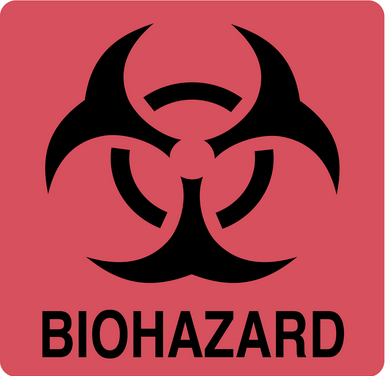
Biohazard signs must be posted at entrances to Bloodborne Pathogen research laboratories and production facilities. The official biohazard sign is a black three lobed trefoil overlaid on a black circle with a red background and the word “biohazard” in all capital letters:
13. TRAINING
All employees who have the potential for exposure to bloodborne pathogens are required to complete bloodborne pathogen exposure training through the NMU Vector Training Program. This is required to be completed prior to the possibility of exposure to the employee or within the first 30 days of employment whichever occurs first.
| Date Approved | 1993-06-01 |
|---|---|
| Last Revision | 2025-12-16 |
| Last Reviewed | 2025-12-16 |
| Approved By | President |
| Oversight Unit | SAFETY DEPARTMENT |
| Under review | No |
| Attachment | All-Appendix-Documents-A-D.docx |