
Myths & Mysteries & Legends
ACKNOWLEDGEMENTS
Much of this exhibition was researched and written by students in the Department of Sociology’s course, AN 495 - Myth, Mystery, and Fraud in Archaeology, led by Dr. Scott Demel. The students conducted research on some of the topics and then wrote the exhibition text for each area. They also identified photographic resources to compliment the exhibition. The Beaumier Center would like to thank the students and Dr. Demel for their assistance and work on the exhibit: Rachel Blake, Luke Carlson, Matt Kangas, Zachariah Kitzman, Amber Maldonado, Alex Martinez, Jesse Morrow, Steve Seward, Nicole Shoup, Nicole Taylor and Amanda Temple.
Other research and writing was done by Beaumier Center museum assistant, Gabrielle Hoffman, and the Center’s director, Daniel Truckey.
The exhibit panels were designed by Riley Crawford, graphic design assistant at the Beaumier Center.
The Beaumier Center also thanks:
Kristi Evans and Becky Tavernini for editing the manuscript. Dr. Martin Reinhart for his review of the manuscript and assistance with Anishinaabeg and Native American perspectives.
The Central U.P. and NMU Archives for research assistance.
Photographic credits:
Alex Maier - Five Aces Media
Chris Doyal, Steve Libert and Steve Ruck - Great Lakes Exploration Group.
Scottie B. Tuska - Alleycat Studios
Belief
noun be.lief \b - lēf
: a feeling of being sure that someone or something exists or that something is true
: a feeling that something is good, right, or valuable
: a feeling of trust in the worth or ability of someone
Though we often don’t recognize it, our lives are surrounded by folklore and myth. However, when we use those terms, most people believe that they refer to something that is a hoax, prank or is completely unbelievable. This is too simplistic of a way to view the meaning of myth and lore in our lives. Myths are not just ancient stories that give an explanation for the unexplainable, they carry cultural values and shared beliefs. As the Webster’s dictionary definition states, belief can be both about feeling sure something exists and also that something is good, right and valuable.
Some of our myths and lore have been proven to be untrue by the study of science, anthropology and history. But many people hold to beliefs, even in light of evidence to the contrary, or lack of empirical “proof” that their beliefs are not true. So why do we still believe? The answer to this question is that we all have our personal feelings and cultural perspectives on what is true and what is not.
This exhibition isn’t trying to prove or disprove any particular myths or be disrespectful to people who do believe. Rather it is an examination of the role of myth through some of the more intriguing myths and stories in U.P. history.
Evidence
There are five different types of evidence; historic, cultural, trace, physical, and anecdotal. These types of evidence are gathered and used to support or refute facts or claims.
- Historic evidence is the use of primary sources from the time period being studied:
these can include buildings from the time period, letters, books, etc. - Cultural evidence includes the stories, oral traditions, myths and objects used by the culture being studied.
- Trace evidence is when objects have contact with other objects or materials. For example, these materials could be fibers, textiles, hair, pollen, soil, etc.
- Physical evidence is an actual object that is presented by a party as an illustration of a fact (Basic Rules of Evidence).
- Anecdotal evidence is based on reports or observations of usually unscientific observers. For example, evidence is used to support or refute claims and facts that have been stated.
EPISTEMOLOGY, HOAXES, AND MYTHS.
Epistemology is the study of how we come to understand the things we know. The basis of Epistemology is philosophical in nature. Its core tenet is that we live in a knowable world with absolutes. “All our knowledge begins with the senses, proceeds then to the understanding, and ends with reason. There is nothing higher than reason.” Immanuel Kant. For example, if I have an apple on a table, the lack of an observer or outside interaction with that apple doesn’t cause it to stop existing.
HOAX.
A hoax is a deception. It is more thought out than a prank, thus being thought up it is not simply a mistake leading to false information, and can often have a purpose. The most common hoax is done to trick people out of their money. It can take the form of trying to turn in a fake Bigfoot body for a cash reward or creating the Cardiff Giant. These types of hoaxes are mostly simple affairs. They also share that place with those who play elaborate jokes for their own amusement, like Doug Bower out of England, who admitted to creating crop circles. Another cause for hoaxing is to gain prestige. It is often done for academic or political gain, such as an archeologist faking a pottery shards location in an effort to prove pottery making in his region, or Vladimir Putin “finding” Byzantine pottery in a river in Russia. Hoaxing to gain prestige can then also be extended to large groups. Some religious practitioners in fundamentalism in Christianity or Mormonism during the 18th and 19th centuries misrepresented and fabricated artifacts in efforts to support their religious viewpoints.
MYTH.
The function of a myth in a culture is to recall the past, express a moral value, and act as a unifying force. For instance, in Anishinaabe Ojibwe culture there are mythical beings that embody the power of nature. Thunder birds battling huge serpents with bolts of lightning, and the dangers of not respecting the gigantic water spirits inform the people about natural relations in ways that are both memorable and instructive. Whether taken literally, or metaphorically, the outcome was largely the same for people who grew up knowing these stories—a deep respect and understanding of the world around them and their place in it. Myth as a concept is not rendered irrelevant with the rise of empirical understanding. In fact, when myth and empirical knowledge are joined together in an appropriate manner, the story is enhanced and becomes even more useful to the people who share it and live it.
Ancient Mariners

Norse Discovery of America
The Norse discovery of the New World is estimated to have taken place in the years 1000-1003 A.D. The expedition’s leader is generally believed to have been Leif Erickson the son of Erick the Red. The land they “discovered” was called “Vinland” and it was believed to have been along the North American east coast. For a long time there was no evidence that supported the Norse “discovery” of the Americas; that is until a Norse settlement was found at L’Anse aux Meadows, Newfoundland, in 1961 by Helge Ingstad. At L’Anse aux Meadows, several Norse houses were found along with artifacts that prove the existence of the Norse people living there. The name Vinland is generally credited to the belief that there were grapes in the area, but no evidence of grapes have been found within the archeological record.
Vinland Map
The Vinland map was discovered bound in a 15th century book during the 1960s. The supposedly Norse map depicted the New World. The map legend reads “Island of Vinland discovered by Bjarni and Leif and company.” Upon the map’s revealing, many were skeptical of its validity. The map was visually unlike anything known during that time and cultural period. Handwriting analysis showed that the map was not drawn by the author of the book, but by a different hand. Testing of the ink showed a pigment, titanium white, was used. This pigment was not available until 1917. The author of the map is still unknown, and despite scientific evidence, some still believe the map’s legitimacy.
Ancient Mariner contact with Native Peoples
There are several stories in the Viking sagas that mention interaction with natives from the North American continent, or what they called “Skraelings.” Assuming these Vikings are the same who established L’Anse aux Meadows in the 11th century, the indigenous people with whom they interacted would have been the Beothuk, who lived in the area from the 9th century until the early 19th century. According to the legends, the Vikings and Natives interacted through trade as well as warfare. In fact, arrowheads have been found with the remains of buried Norse explorers. At a Native American site in Maine, a Norwegian penny was found, minted to around A.D. 1065. Archeologists have also found Viking artifacts further north in Arctic hunter settlements, including strands of yarn that do not match how Arctic people of the time made cordage. These strands match exactly with how Norse women made strands in Greenland. Viking tally sticks were also found at these sites, despite that the sites are in a treeless tundra. Tally sticks were used to record trade transactions, and for spindles, which may have been used for spinning fibers. This evidence suggests the two groups were trade partners. At Ellesmere Island, NU Canada, parts of a Viking bronze balance were found, used by the Norse for weighing and measuring, another indicator of trade with Natives.
So far, most of the evidence we have for Viking contact with Native people of North America is for these Arctic hunters and the Beothuk of Newfoundland. Some believe Viking explorers made it as far south as the Upper Peninsula, possibly to mine or trade for copper. If Vikings had made it this far south, or west, we would expect to find physical artifacts similar to those found in Newfoundland. It would even be conceivable to find a Viking shipwreck because Lake Superior, being so cold, would have good preservation capabilities. However, evidence to support this theory has yet to be discovered.

Aurora Borealis
The Northern Lights, also known as Aurora Borealis, are a well-loved phenomenon not only here in the Upper Peninsula, but around the world. These lights are mysterious, captivating, and awe-inspiring. The Northern Lights incited the same feelings of wonder and awe for people hundreds to thousands of years ago as they do now, but instead of using science to explain their origin, people back then used oral tradition, stories, and myths.
Scandinavians had various tales trying to explain the Borealis. Norse mythology associated the lights with Bifrost's bridge: a fiery arch across the sky which allowed the gods to travel between Heaven and Earth. The Norwegians also associated it as an omen of harsher weather to come: snow and wind.
The Finns also had their own ideas to explain the Aurora. There were magical firefoxes whose sparks from their radiant fur lit up the night sky. Other possibilities were that it was women of the North hovering in the air or Sibylle burning her woolen blanket.
Across the world, Eskimos who resided in the lower Yukon River in Alaska saw these lights as dancing spirits of their favorite animals: deer, seals, salmon, and beluga whales. For the Cree and the Anishinaabeg, the Northern Lights, which they called wawatay, were their ancient ancestors celebrating life and creating a pathway to the next world for the spirits of the newly departed.

Bigfoot
Bigfoot, Sasquatch, Wiindigo, Yeti, or the Wild Man in the Woods. Whatever name you chose to call it, cultures all around the world have stories and personal accounts depicting this mysterious creature. These various origin stories show us that the Bigfoot legend has existed well past the famous California “Bigfoot” tracks of 1958 that launched the creature into superstardom of American media and pop culture.
Some of the earliest accounts come from the Kwakiutl and Tsimshian Tribes in the Pacific Northwest. These tribes have oral legends of a big man in the woods or a protector that are over a thousand years old, well before European contact. These existing legends can be verified by wooden “primate-like” masks dating from around the same time. Other similar depictions have been found on rock and cave art, one of the most famous being of a “bigfoot family” found in California. Although there are different theories as to what Bigfoot actually is, from a magic man, Wiindigo, or huge unknown primate, what is certain is that many around the globe believe in its existence.
Sightings of Bigfoot in the Upper Peninsula vary by region but have similar descriptions from those who have claimed to spot the woodland ape. Most sightings describe a large bipedal creature roaming inside the woods. A majority of the descriptions of Sasquatches in the U.P. describe it having reddish to brown fur from head to toe. It has robust shoulders and a large frame of body with abnormally long arms. An estimated size of footprints from a Sasquatch range from 15 to 20 inches long and as wide as 8 inches. Some witnesses claim that rock features near Sasquatch sightings are homes to these woodland apes. The suspected diet of a Yooper Sasquatch varies from berries, lichens, deer, elk, fish and much more.
The many sightings of Sasquatches in the Upper Peninsula can be seen as microscopic compared to all the sightings throughout North America. Amongst the numerous sightings, there are many similarities and differences. Those who have claimed to see a Bigfoot in southern Florida describe the creature as being covered in black to brown fur. The estimated size varies from six-and-half feet tall to eight feet tall. Unlike the sasquatches in Florida, descriptions of Bigfoot from the Northwest are somewhat similar to those in the U.P. Unlike the description from the U.P. most of the encounters in the Pacific Northwest have the mysterious Sasquatch throwing pebbles and even boulders at the witnesses. Though there are differences in the descriptions of Sasquatches throughout the United States, there are similarities. Most, if not all, descriptions of Sasquatch tell of a large bipedal creature, which has abnormally long arms and an atrocious smell.
Loup Garou
The French settlers who came to North America had a very strong tradition of tales about werewolves and their descendants carried those stories with them to the Upper Peninsula when they arrived in the late 18th and early 19th centuries. The French called this creature the loup-garou. Unlike most werewolf stories, the loup-garou did not simply kill people with their claws and teeth. They could also kill people just by their presence, sometimes days after contact. Also, they did not always take the form of wolves, but of other animals as well.
The Anishinaabe had tales of similar types of beings which had shape-shifting qualities. However, in their culture merely discussing these beings and the stories connected with them is a taboo. Unlike the French traditions, which were openly shared, the Anishinaabe shape-shifter tales were certainly not shared outside their cultural group and rarely even within. However, with the intermarriage of the French and Anishinaabe (creating a new culture known as the Metis) these myth traditions began to merge.
One of the U.P.'s greatest storytellers was Aunt Jane Goudreau of St. Ignace. She was Metis and well versed in both the French and Anishinaabe story traditions. She shared many of her loup-garou stories with famed folklorist Richard Dorson during his visit to the U.P. in 1948.
“Old Sarah was very sick all the time...Every night she was too ill and had to go to bed, when a great big ghibou (owl) came and perched on her clothes line. It came the same hour every night...
The nephew, following his aunt’s instructions to protect her chickens, shot the owl that perched near her window. Although he saw it fall, he could not find the bird, but instead discovered a neighbor, Mrs. Lozon, struggling to crawl uphill, despite having been well the day before. Mrs. Lozon, who never recovered from the injury, was taken to her sister's house, while the shooter, terrified, realized he had likely shot a roup-garou (werewolf) rather than an owl, and feared retaliation for exposing her secret.

The History Channel regularly airs shows that discuss the possibility of Ancient Mariners visiting the Great Lakes Region. In these episodes, they feature physical evidence that Ancient Mariner historians believe show that the Vikings or Phoenicians visited the area, in search of copper or for exploration. One of those items they often use as evidence is this small petroglyph that can be found outside of Copper Harbor. There is very little known about this petroglyph, including when it was first discovered or the date in which it was created. Various Ancient Mariner historians believe that is a Viking ship and others that it is Minoan (which connects with their beliefs on the Newberry Tablet). However, other trained archeologists have come to the conclusion that the carving is much too new to be from either of those periods and may have been created as late as the 20th century. In the end, there is no conclusive evidence regarding its origin or date but it continues to fascinate both the believers and skeptics.
Disappearance of Father Rene Menard
In the summer of 1660, an enormous flotilla of canoes entered Lake Superior. Amongst the dozens of canoes of Algonquin paddlers was a smattering of French fur traders and an older man in a black robe. This man was Réne Menard, a veteran of many years of missionary work in Canada, and the first missionary to visit Lake Superior.
Though only 55 years of age, Menard had been greatly weakened by his many travels. Still, though many doubted he could make the journey (even he doubted he would return), he insisted on making the trip. Though they had accepted him as part of their party, the Indians became exasperated with Menard for not being able to keep up with their paddling or portages. Eventually, he was abandoned by his Indian hosts and most of the voyageurs in what is now L’Anse, Michigan. There he spent a long winter waiting to proceed in the spring to a village along Chequamegon Bay in what is now Wisconsin.
It is here that the mystery of Father Menard begins. On his journey to Chequamegon, they met a Huron Indian who had come north from his home village in what is now Central Wisconsin, where most of his tribal band was starving. A group of voyageurs would travel to the village to confirm it was true. After doing so, they returned to what is believed to be Chequamegon Bay to confirm the story. Knowing that this would present him with many opportunities to save souls before they passed away, Menard left for the village with one voyageur paddler, though the others said the journey was too rough. Along the journey, within one day of the Huron village, Menard disappeared while his voyageur was portaging materials up a river. To this day, his remains have never been found nor has the exact spot of his disappearance been identified. It is reported that years later some of his garments and personal effects were found in the possession of a local Indian but this has never been confirmed.
There are many questions that have never been answered. Was Menard murdered when his voyageur was out of sight? Did he have a heart attack and fall into the river, only to be swept away? More than likely, we will never know exactly why or when. Though he was not particularly successful as a missionary, his disappearance will keep his memory alive.

Le Griffon

Under the surface of the Great Lakes are literally hundreds of shipwrecks, evidence of the power of the lakes and the fragility of man’s creations. The best known of these shipwrecks is the Edmund Fitzgerald, which sank on November 10, 1975, and was the largest vessel ever to do so on the lakes. But the very first ship to disappear on the lakes was also the very first sailing vessel on the Upper Great Lakes, Le Griffon.
Built in 1679, along Cayuga Creek next to the Niagara River, it was part of the famous expedition of René-Robert Cavelier, Sieur de La Salle. On August 7, they left the Niagara River and sailed into Lake Erie, on their way to Lake Michigan and Green Bay. In addition to trying to find a Northwest Passage to Asia, La Salle intended to trade with the local Indians and at Green Bay loaded the ship with several tons of furs. La Salle commanded six men to sail the ship back to Mackinac Island, while he and others in their party went to explore the Mississippi River basin. The night after Le Griffon left Green Bay, a massive storm hit the lakes. The ship was never seen again...or was it?


For the next three centuries, mariners on the lakes claimed to see a ghost ship at night on Lake Michigan. They said it looked like a ship from the 17th century and was abandoned. In fact, ghost ship tales are common on the Great Lakes, but Le Griffon is considered the most famous.
During the 20th century, many people claimed to have found the remains of Le Griffon or even the skeletons of her crew. However, none of these claims have been proven. In the past decade, there have been two very credible underwater archeological digs in Lake Michigan that show promise for revealing Le Griffon’s location and fate. Time will tell if these wrecks can be verified as Le Griffon, or if the ghost ship will slip away again, never again to be seen.


Kensington Runestone

Newberry Tablet
The Newberry Tablet a strange clay tablet was found north of Newberry, Michigan in 1896. There are a couple of stories of how the tablet was found. In one story, some say it was found in the stump of a tree by a logger. Others tell that it was a farmer who found it in a field while plowing. What is known is that the tablet was made of baked clay and was found along with three stone statues. The tablet features some type of writing inscribed in a grid pattern on the surface. In 1988, the controversial scholar, Dr. Barry Fell ((President of the Epigraphic Society) studied photographs of the tablet and claimed it was Hittite Minoan Syllabary in 1988. The tablet was photographed after its discovery but before being sent to the Smithsonian to be analyzed, it was broken due to the tablet not being heat treated properly. The Smithsonian declared the tablet to be a fake, but there are those who believe that they were left by "Ancient Mariners." The remnants of the Newberry Tablet can still be found at the Fort De Buade Museum in St. Ignace, Michigan. There are other "ancient mariner" tablets, with the largest collection belonging to that of the Church of the Latter Day Saints (LDS). These are simply known as the Michigan Tablets, as the vast majority of these relics have been found in Michigan. The Mormon experts state that they have found similar tablets as far west as Utah and are convinced of all the tablets' authenticity.
According Scott Wolter (famous from the History Channel's "America Unearthed"), the Upper Peninsula is missing some 500,000 tons of copper. Ancient Mariner theorists speculate that these miners were not Native Americans, as the tool kits of the aboriginal people were largely made of stone. However, the majority of anthropologists believe that Native American stone tool kits were sophisticated enough to have been involved in mining copper, using two different types of mauls for that purpose. In fact, many Native American copper artifacts have been found throughout the continent, ranging from ceremonial and decorative items to tools and weapons. Ancient mariner theorists, however, point to the fact that the residents of the Mediterranean region were large consumers of bronze and copper tools, and that the Phoenicians, having exhausted much of their own resources in producing the vast quantities they needed, would have searched for more abundant and readily available materials. However, there is no real solid, archeological or historical proof that the Phoenicians or "Ancient Mariners" ever visited the Western Hemisphere, much less the Great Lakes. Unfortunately, many of these theories abound on television shows like "America Unearthed," but without any real fact or evidence to prove or back-up their theories.
Text by Zachariah Kitzman
Paulding Light

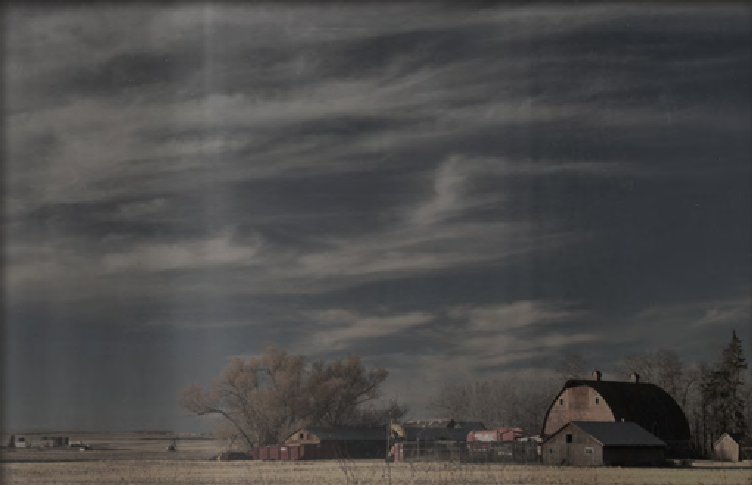
Photo taken by Scottie B. Tuska
Alleycat Studios
The Paulding Light, a strange light that appears most nights just south of the town of Paulding, Michigan, intrigues all who come to see the mysterious glowing phenomenon. For decades, people have come to see the light and attempt to explain how it exists.
There have been many explanations for these "ghost lights." One is an angry Native American chief upset about the power lines. Another is that it's the light of a mail carrier who was killed while crossing the swamp. The best-known legend is that the light is the waving signal lantern of a decapitated railroad brakeman "whose ghost is destined to remained forever at the sight where he met his untimely death."
Even television shows have visited the light in order to explain this phenomenon. Unsolved Mysteries and Ripley's Believe It or Not tried to identify the source of the light and ultimately could not. The latter is supposed to have offered a reward to anyone who could identify the Paulding Light's source. The reward remains uncollected to this day.
However, scientific explanations have been offered to convince people who observe the light of how it occurs. They include reflected light from swamp gas, leaking of radioactive gases, or mere reflections from the lights of passing cars.
In 2010, students from Michigan Technological University in Houghton researched the light to discover its origins. In the booth, you can watch a video of their research.
Even though this mystery has been solved, the Paulding Light will remain just as fascinating to those who make the trek to its mysteriously glowing lights.

UFO over lake superior
On the evening of November 23, 1953, a US Air Force Scorpion F-89 jet was scrambled from Kinross Air Force Base in Kinross, Michigan. Air Defense Command radar had picked up an unidentified flying object over Lake Superior and the crew and jet on loan from Truax Air Force base in Wisconsin were sent to find out the origin of the “blip.” On board were pilot Lt. Felix Moncla and radar observer 2nd Lt. Robert Wilson.
The jet was ordered to fly at 30,000 feet until it arrived at where the blip was being signaled about 70 miles from the tip of the Keweenaw Peninsula. At that time, they were instructed to fly sharply down at the object and rendezvous with it at around 7,000. However, when this moment arrived, both the UFO and the Scorpion F-89 disappeared from the radar screen. Search flights and boats were sent to the location but they never found any wreckage or the bodies of the missing airmen.
The USAF’s report on the incident claimed that the “blip” was actually a Canadian Air Force cargo plane but the Royal Canadian Air Force denies that it was anywhere near that spot on Lake Superior. Because it was in November, the weather was a bit blustery with snow, but there was no reported turbulence at the time of the flight. In another twist, an identical F-89 from Truax had exploded in mid-air and crashed in Madison. Some believed that maybe the same fate led to the disappearance of the Lake Superior F-89. However, to this day, there has yet to be any wreckage spotted of the plane and it remains a true unsolved mystery.


