
For most people, blood donation and blood centers are a lifeline and resource they don’t think about until they or someone they love needs it. At the very heart of the life-saving work of blood donation in our region is the Upper Peninsula Regional Blood Center. It's here that Medical Laboratory Technician and Northern Michigan University (NMU) alumnus, Teagan Blohowiak '24 (Clinical Lab Sciences), stepped into a role that impacted lives across the entire region.
From NMU to the Frontlines of Healthcare
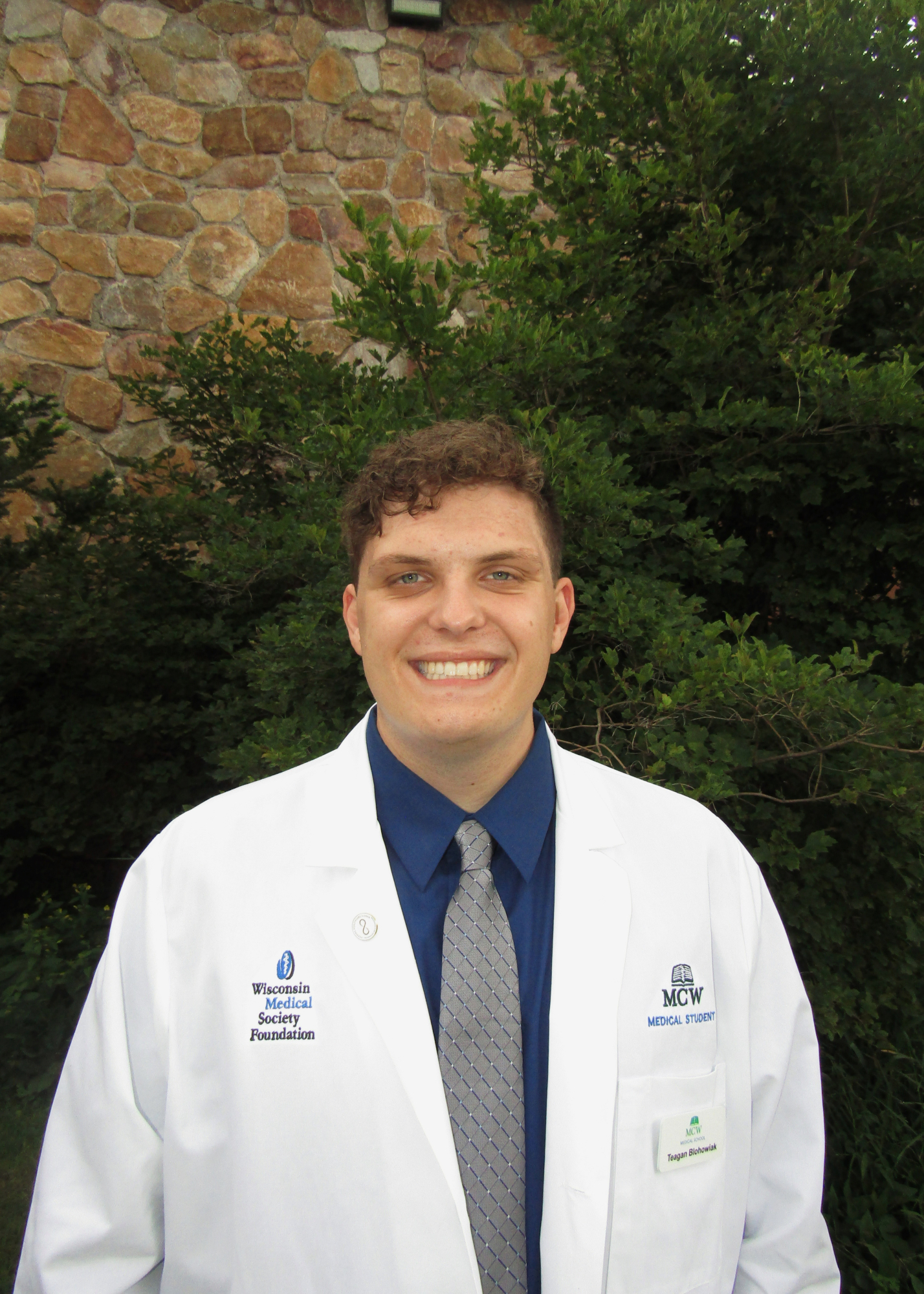
For Teagan, a rotation at the U.P. Regional Blood Center in Marquette during his senior year clinical lab sciences practicum enlightened him to the importance of blood donation and the behind-the-scenes process between the actual donation and getting the blood to the hospital. After graduating from NMU with a Bachelor of Science in Clinical Lab Sciences in 2024, Teagan then worked as a Medical Laboratory Technician at the U.P. Regional Blood Center. Here, he assisted with collecting donations, processing units, and labeling and shipping them to hospitals. The U.P. Regional Blood Center supplies blood products to 12 hospitals across the U.P., including those closest to NMU: UP Health System – Marquette and UP Health System – Bell. When asked why he is so passionate about this work, Teagan shared that he loved that his “job touched almost every corner of the Upper Peninsula,” and through it, he was able to help dozens of communities. Teagan also shared that seeing the behind-the-scenes process of blood moving from the donor to the patient has stuck with him. This summer, Teagan started medical school at the Medical College of Wisconsin with plans to become a physician.
Why Blood Donation Matters—Especially Here
The U.P. Regional Blood Center is the sole provider of blood products for many local hospitals. If you or someone you know needs blood in the U.P., the blood is likely coming from the U.P. Regional Blood Center. “That’s why local donation is so important,” Teagan emphasizes. From start to finish, this team ensures that when hospitals need life-saving blood products—whether it's for a trauma patient, a surgery, or a cancer treatment—they’re ready.
One donation can save up to three lives. And while most people can donate whole blood every 8 weeks, platelet donation offers even more flexibility, as often as every seven days, up to 24 times per year. Whole blood donation includes red blood cells, white blood cells, platelets, and plasma, while platelet donation involves filtering out the platelets and returning the rest of the blood to the donor. The reason for the waiting period for whole blood donation is that it allows the body enough time to replenish the blood that was lost. The same amount of recovery time is not required for platelets, as the body can replenish them at a faster rate.
As for plasma donation, which is often confused with blood donation, Teagan explains that plasma is typically collected at for-profit centers and used to manufacture pharmaceuticals. The plasma collected at the U.P. Regional Blood Center, however, is turned into Fresh Frozen Plasma (FFP) and used directly in patient care. The type of patients who receive FFP are those who are having clotting issues or are in a trauma situation and have lost a lot of blood.
Busting Myths and Encouraging Action
Misconceptions often hinder people from donating, and it's important to dismantle them to reduce unnecessary barriers to blood donation. For example, some think it takes too long, and others worry that their donation won’t really make a difference. But the truth?
“It takes just 30 minutes. You walk out with snacks, sweets, and the knowledge that you’ve helped save lives,” Teagan shares.
With the different types of blood donation (whole blood, platelets, plasma, etc.), yo
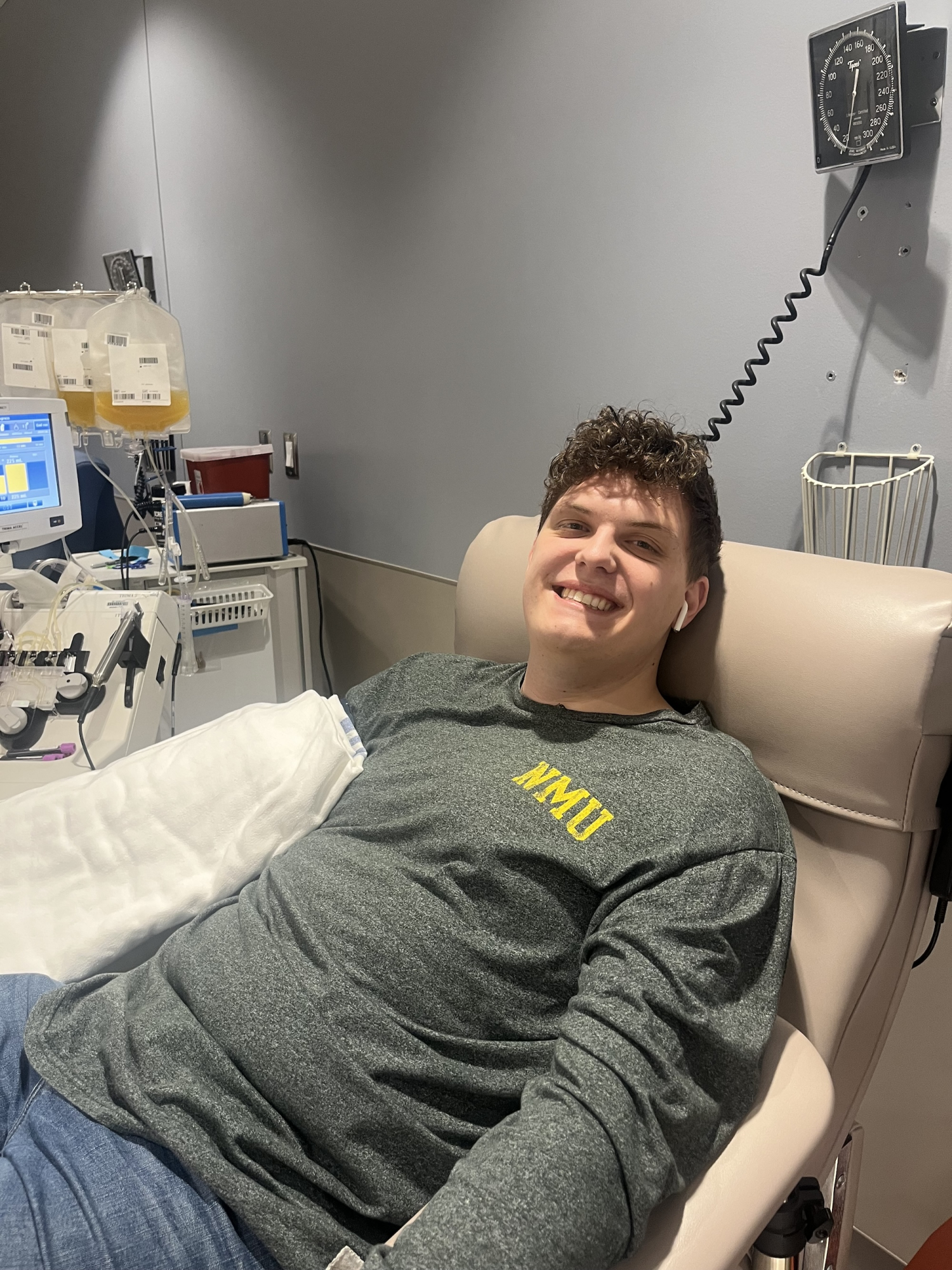
u can determine a frequency and type that works for you. It’s important to recognize, however, that donating different components of the blood doesn’t necessarily mean you have to spend more time at a blood donation center or go more frequently. Oftentimes, they can collect platelets, red blood cells, and plasma at the same time.
Despite the high frequency at which blood donation can occur and the many options that exist, challenges remain. “Many of our regular donors are older, and we need to bring in younger generations to keep the supply steady,” Teagan shares. “There’s no substitute for human blood—someone has to donate it.” Blood cannot be manufactured, even in this time of advanced medical technology, so it’s important that we maintain our blood supply in the U.P. so that it's ready for whoever might need it whenever they might need it.
Want to Help? Here’s How.
If you're ready to donate, the U.P. Regional Blood Center welcomes walk-ins and appointments. They have centers in Marquette, Escanaba, and Hancock, and you can find upcoming drives listed on their Facebook page.
● Marquette: 1400 W. Washington St. | (906) 449-1450
● Escanaba: 710 S. Lincoln Rd, Suite 200 | (906) 786-8420
● Hancock: 787 Market St, Suite 6 | (906) 483-1392
Their hours are 8:00 am–4:00 pm, Monday through Thursday, and 7:00 am–4:00 pm on Friday.
A New Partnership for the Future
The U.P. Regional Blood Center is also building bridges through a budding partnership with the NMU Center for Rural Health. “This blog is hopefully just the beginning,” Teagan shares.
“We want to collaborate more closely to grow the blood supply and make a bigger impact in our rural communities.”
The NMU Center for Rural Health hopes to increase awareness within the NMU student body and the greater U.P. community regarding the importance and necessity of blood donation. Through a partnership with the U.P. Regional Blood Bank, they hope to increase the number of younger people donating blood to bolster and maintain this critical resource within our region.
“There’s a critical need for all blood types right now,” Teagan urges. “If you’re healthy and able, please consider donating. Eat beforehand, stay hydrated, and if you have questions—reach out. We’re always happy to help.” “Better yet, bring your friends. Make it social,” shares Teagan.
Because at the U.P. Regional Blood Center, every drop stays local—and every donation matters.
Ready to Donate?
💉 Call to schedule or plan a time to walk in
📍 Find a center near you
👍 Follow the U.P. Regional Blood Center on Facebook for updates and information on
upcoming blood drives
🌎 Visit the U.P. Regional Blood Center website for more information: uphealthsystem.com/regional-blood-center
The Northern Michigan University Center for Rural Health seeks to improve the health and well-being of Upper Peninsula residents and communities by developing collaborative partnerships that enhance the access and availability of affordable, quality healthcare services. For questions or comments related to this story, contact ruralhealth@nmu.edu.