By Rebecca Tavernini '11 MA
HAVE YOU HEARD OF SEA VEGETABLES?
You may have eaten them as nori, wakame or kombu in Asian cuisine. Another example is dulse, or Palmaria mollis, the scientific name for the lovely red-colored seaweed that grows on rocks along the Pacific coast stretching from Oregon to Alaska. The Latin origin of this name translates to “palm of the hand” because its shape resembles a hand with fingers.
As far as we know, people have been eating it, and its Atlantic relative Palmaria palmata, for nearly 1,500 years. “Let me do my daily work/Gathering dulse/Catching fish/Giving food to the poor,” sings a poem commemorating harvesting off the coast of Scotland in 563 AD. Charles Dickens even wrote of “dulse wives” selling the plant in Aberdeen.
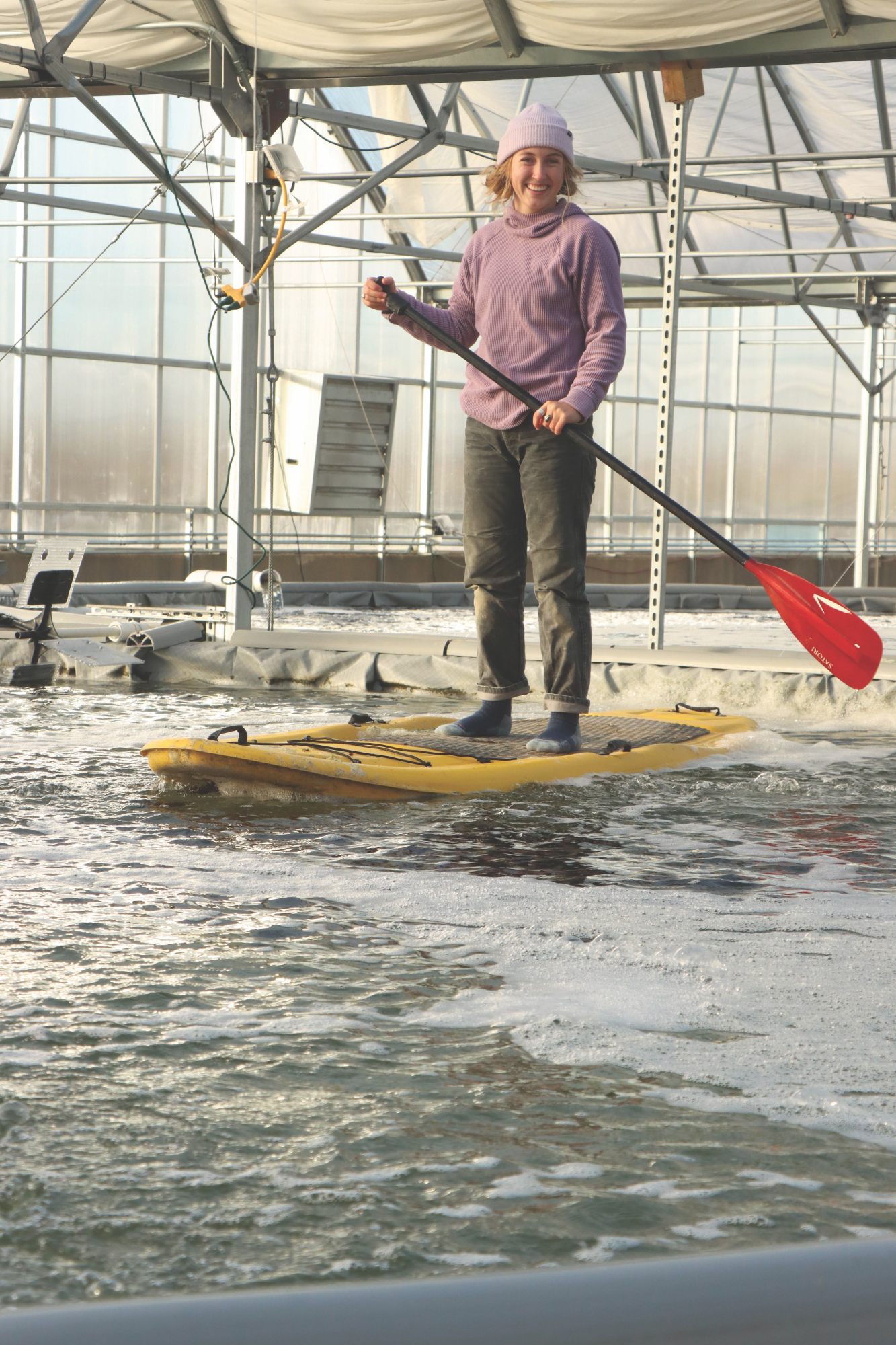
Today, of all places, it’s growing in Allendale, Michigan, at Dulse Co., a controlled-environment farm with a dozen 40-foot-diameter saltwater tanks inside a greenhouse. When Katie Sims ’22 BS from nearby Holland, Michigan, headed to Northern Michigan University, she was planning to become a medical doctor, not a seaweed farmer. But as a biology student, and summer park ranger at Isle Royale National Park, the magic of nature captured her soul.
“In my last year at Northern, I kind of shifted from the anatomy side of biology into the plant and ecological side. At Northern, I learned how important the outside world is, and how important it is to reuse and recycle what the earth gives us,” she said.
As Dulse Co.’s farm manager, Sims is in charge of the growing and production process. “Here at our farm, we reuse all of our water. We treat it, recycle it and reuse it. We’ve been using the same water for over two years.”
The tanks are active with waves propelled by a paddlewheel oxygenating a nutrient-rich salty slew. The propagation process could not be more simple, as Sims explains.
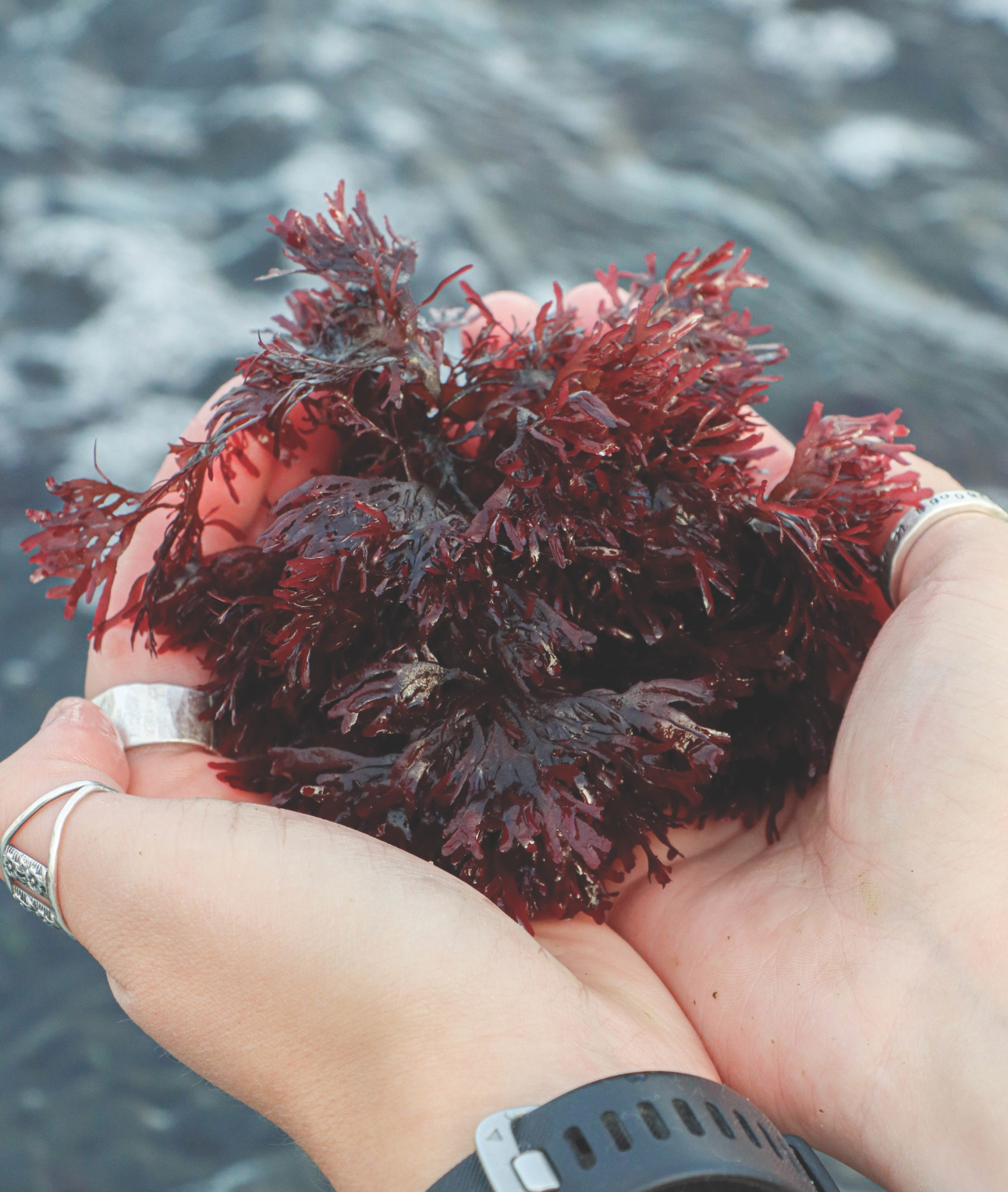
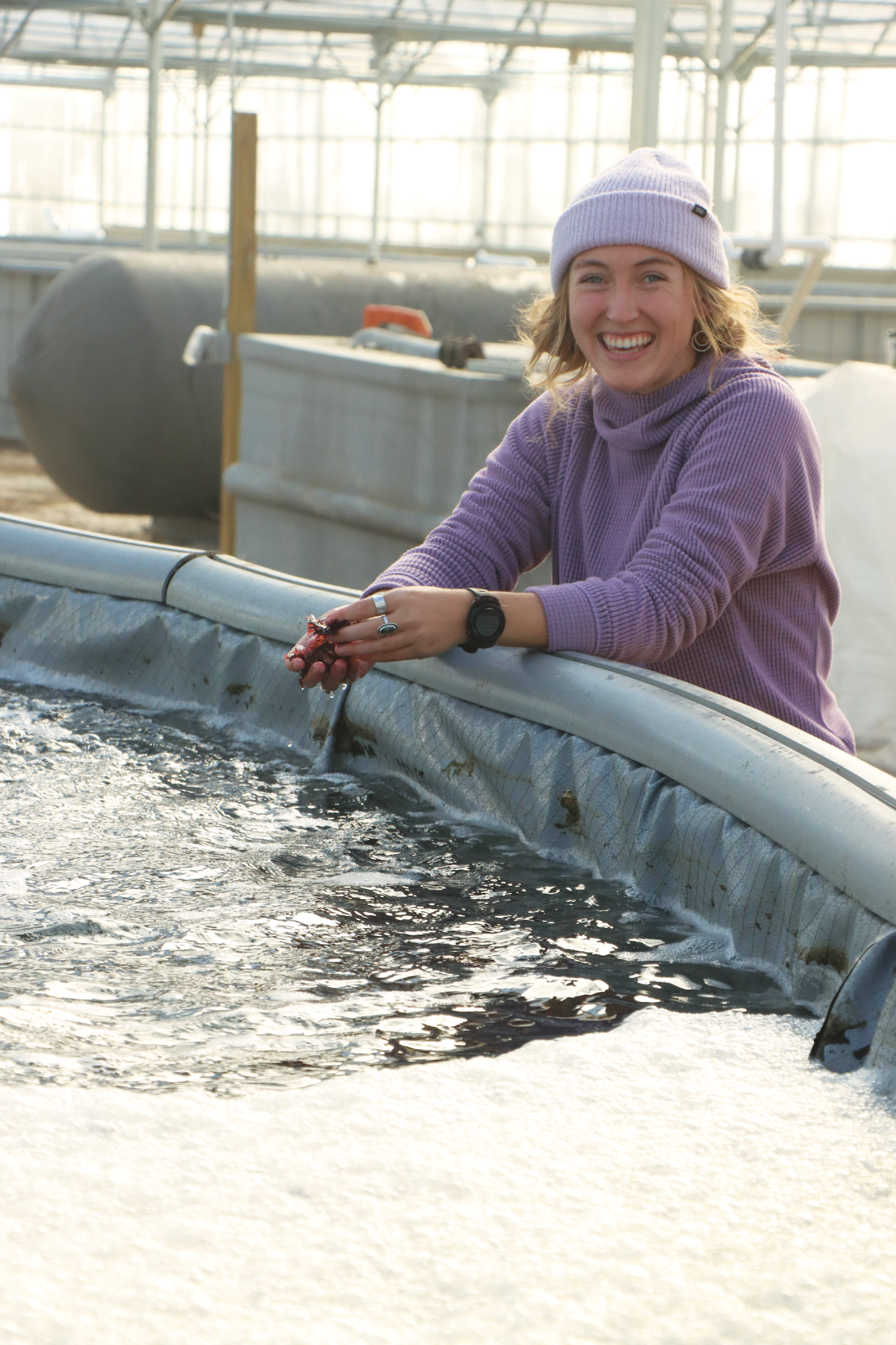
“As the fronds tumble and rip apart within the aeration of the tanks, they’ll just keep on growing. It’s a super simple process. We have itty bitty pieces that will grow up into a big fluff balls. You just need to add sunlight and some nutrients.” Seaweed grows relatively fast. “Its specific growth rate is around nine to ten percent a day,” she said. “So we can easily double the amount of seaweed within a tank in just two weeks.”
The mission of Dulse Co. in growing all of this seaweed is to provide the world with a unique, nutritious product while ensuring the process of farming and harvesting aligns with sustainable agricultural practices.
“This stuff does have a lot of good health properties,” said Sims. “It’s high in protein, antioxidants, vitamins and nutrients, and is a great meat substitute.”
With its antibacterial properties, it can help heal wounds. It’s even known as a good hangover remedy.
BUT WHAT DOES IT TASTE LIKE?
“It’s salty, obviously, since it’s grown in saltwater, but it has like a smoky, umami flavor. You can add it to just about any dish
for a little bit of flavor. I’ve been using it in salads, cutting it up really fine and adding it to dressings. It’s an easy nutrient boost that you can put in any kind of meal.”
DOES IT COOK WELL TOO?
“You can fry it, and it tastes just like bacon!” The United States imports more than 90% of its seaweed, mostly from Asia, where cultivation has centuries of history.
While Dulse Co. perfects and expands its production, they are finding their fit with the market —whether it’s culinary, medicinal or other. If you build it, they will come. They are also planning internship opportunities for students to work on the “farm.”
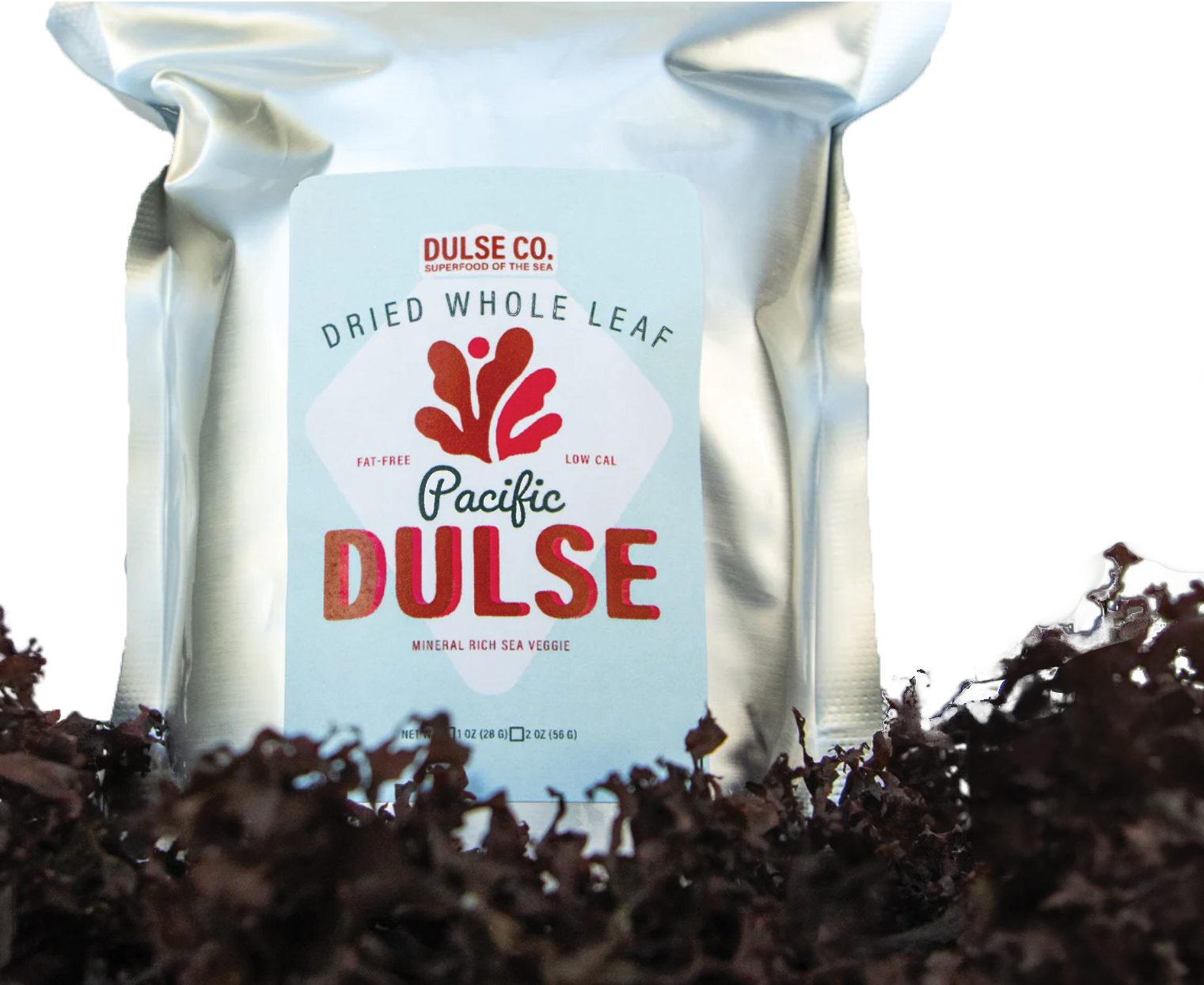
Dulse Co. is now selling both fresh and dried products at the West Michigan FarmLink, an online marketplace where local buyers can purchase local foods from West Michigan Farmers and have them delivered or picked up in the Grand Rapids area.
"At Northern, I learned how important the outside world is, and how important it is to reuse and recycle what the earth gives us." - Katie Sims ’22 BS, Farm Manager at Dulse Co.