Beaumier Upper Peninsula Heritage Center
Marking the 50th anniversary of the demise of the Edmund Fitzgerald with 29 men aboard, the Beaumier Upper Peninsula Heritage Center is displaying its last exhibit, Gales of November: Shipwrecks of Lake Superior, in its Greis Hall gallery. After 10 years of welcoming the community in this location, the center is moving to the main floor of Harden Hall, and its collections storage will be conveniently housed next to the Central Upper Peninsula and NMU Archives on the first floor.
“We will be kind of hidden, but will have better visibility with students,” said Director Daniel Truckey ’90 BS. “We will be better able to collaborate with the Archives as well.”
The new gallery will open in mid-January and feature a permanent display on the history of NMU and a space for changing exhibits. The premier exhibit focuses on the Migratory Bird Treaty Act of 1918 and features original correspondence between proponents George Shiras and former President Theodore Roosevelt. The story is being developed by NMU emeritus faculty member James McCommons, who penned the book Camera Hunter: George Shiras III and the Birth of Wildlife Photography and the forthcoming The Feather Wars and the Great Crusade to Save America’s Birds.
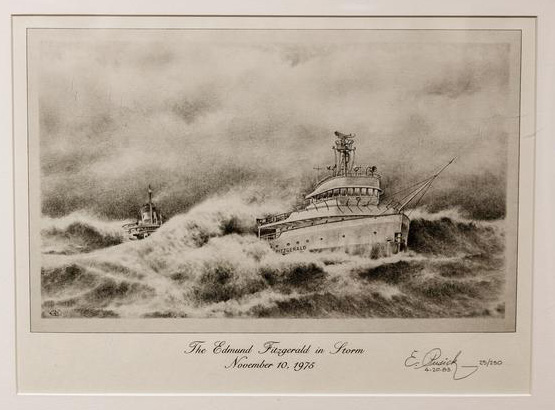
In the meantime, museum visitors can experience the tales of November shipwrecks with salvaged artifacts on loan from Isle Royale National Park and informational panels designed by student Zephyrus Call, a social media design management major. Four other NMU students assisted in the installation of the exhibit. Also featured are drawings by noted maritime artist Ed Pusick, on loan from the Fred Stonehouse collection at the Marquette Maritime Museum.
“This month has mythical status in maritime history—with the most historic, tragic wrecks. Some were completely lost and never found,” said Truckey, pointing to a painting and panel of two 1918 French Naval minesweepers built in Canada—the Inkerman and Cerisoles—which sank in Lake Superior enroute to the Atlantic with 76 onboard and to this day have not been found. Another panel tells of a doomed wooden ship near Whitefish Point where sailors froze to death in the icy waters though rescue ships were just minutes away.
The tie-in 2025 Sonderegger Symposium, Above and Below the Surface: Maritime History of the Great Lakes, can be viewed here.
—By Rebecca Tavernini '11 MA
Seaborg's Nobel Prize
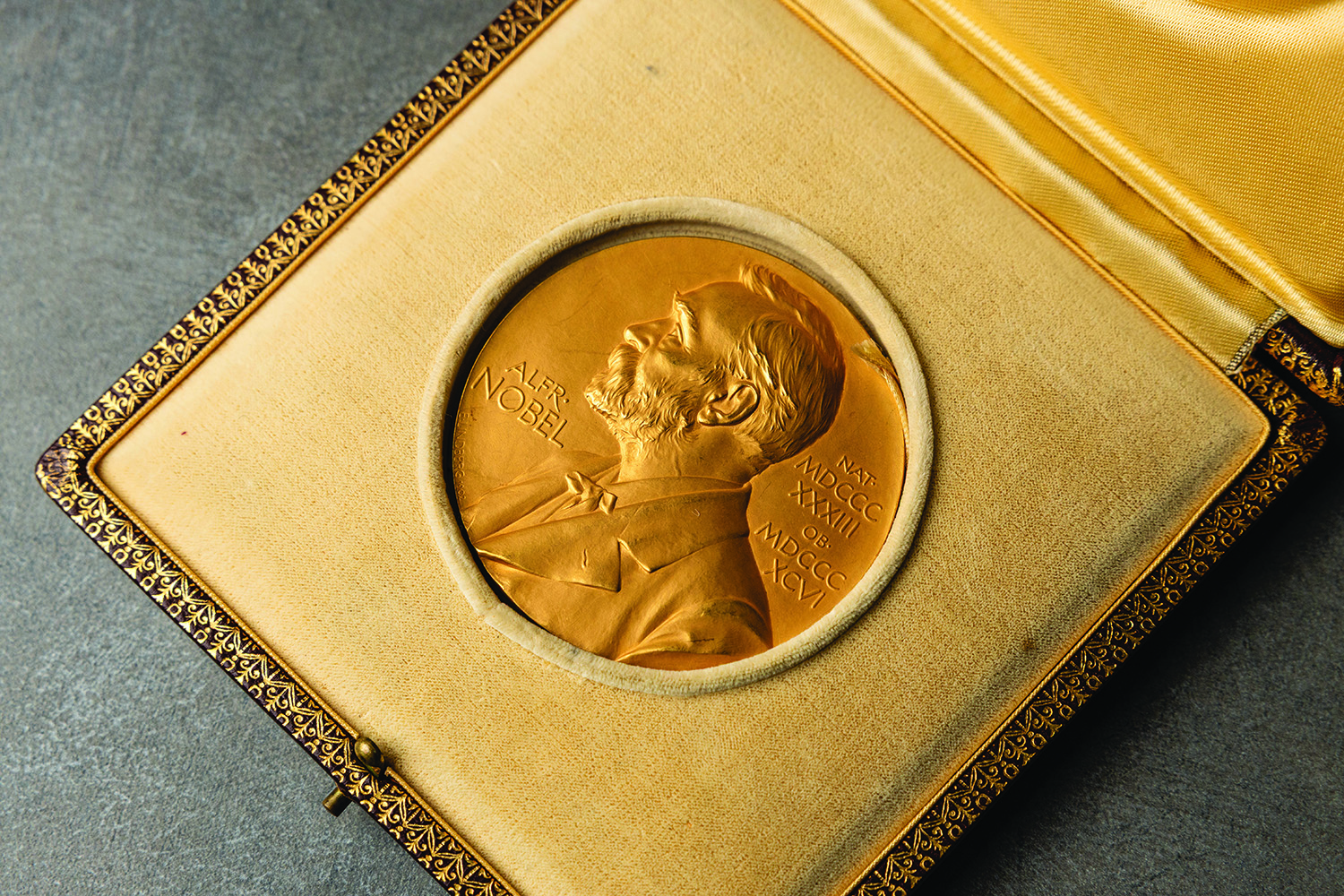
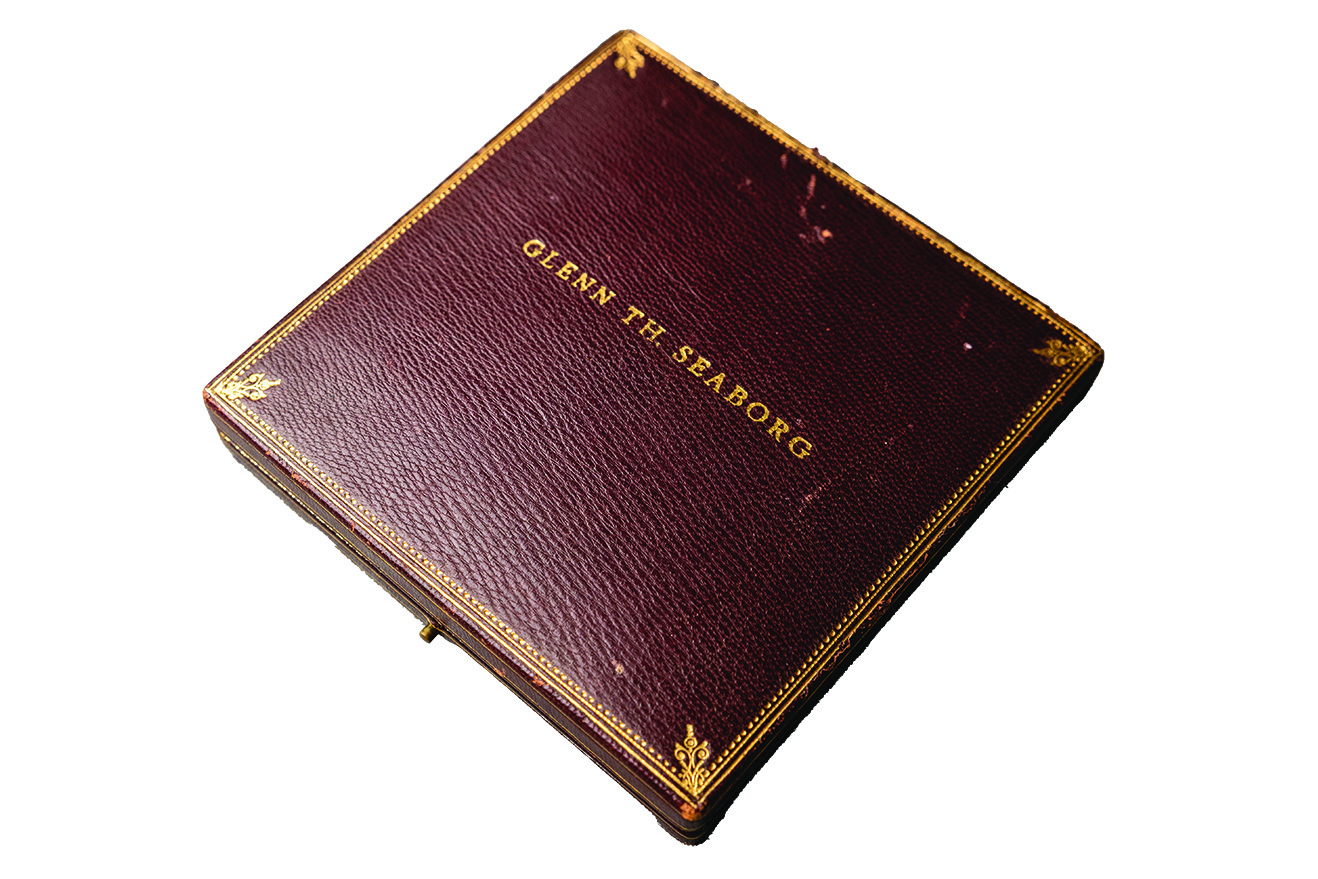
In the late 1990s, Nobel Prize–winning chemist and Ishpeming native Glenn T. Seaborg began donating his papers and other materials to Northern Michigan University. Following his passing in 1999, his children continued his legacy by donating additional items and artifacts to the university. Today, these materials are housed across several locations, including the NMU Archives, the Beaumier U.P. Heritage Center and display areas within the Seaborg Center and Superior Dome. In 2022, Chris Standerford ’97 BS, ’08 MS, director of the Glenn T. Seaborg Mathematics and Science Center, and Daniel Truckey were contacted by members of the Seaborg family regarding a final donation of medals from their father’s collection. Among the 69 medals was the most significant of his career — the 1951 Nobel Prize in Chemistry, awarded jointly to Dr. Seaborg and Edwin McMillan for their pioneering work in the discovery of transuranium elements (those heavier than uranium). While the original intention was to display the Nobel medal alongside the rest of Dr. Seaborg’s collection at the Seaborg Center, its exceptional monetary and historical value required enhanced security measures. For this reason, the medal is currently secured and preserved by NMU’s Police Department.

Beaumier Center Director Daniel Truckey and Collections Management Assistant Samantha Pynnonen

Items and narratives displayed from numerous Lake Superior shipwrecks

Rudder position indicator from The Algoma

Shipwreck at Pictured Rocks by maritime artist Ed Pusick.

Packing up the storage rooms in the Beaumier Center in preparation for the move from Gries Hall to Harden Hall.